AI Agent Development Services for Real Business Workflows
BitBytes helps growing businesses design and implement AI agents that do more than answer questions. We build agentic systems that work across CRM, helpdesk, ERP, dashboards, Slack, email, WhatsApp, and internal knowledge sources so teams can route work faster, reduce repetitive handling, and keep human control where it matters.







What AI agent development services really help you improve
Turn repetitive support and operations tasks into structured workflows with clear logic, approvals, and handoff paths.
Connect AI agents to real systems so they can route work, update records, trigger actions, and move tasks forward.
Add knowledge grounding and case context so agents operate with more consistency than isolated prompt-based tools.
Keep humans in control where risk, exceptions, or edge cases require review, override, or escalation.
Build toward production-ready execution with monitoring, evaluation, and rollout discipline instead of stopping at prototypes.
Who this service is built for
This service is for businesses with real workflow complexity, repeated manual handling, and multiple systems that need to work together more reliably.
Support-heavy and operations-heavy businesses
Best for teams dealing with high volumes of repetitive requests, routing issues, inconsistent handling, and manual follow-up across CRM, helpdesk, dashboards, messaging channels, and internal tools.
Product-led SaaS companies
A strong fit for product teams adding AI into active software products, especially when the goal is to improve workflows, ship AI features, or connect intelligence to real product actions.
Lean software teams that need execution support
Useful for teams that already know what they need to build but want a senior-led partner to design, integrate, and deliver the system without adding heavy process overhead.
Real AI agent work you can evaluate
These projects show what structured AI agent implementation looks like in production - from the workflow problem to the system that solved it.
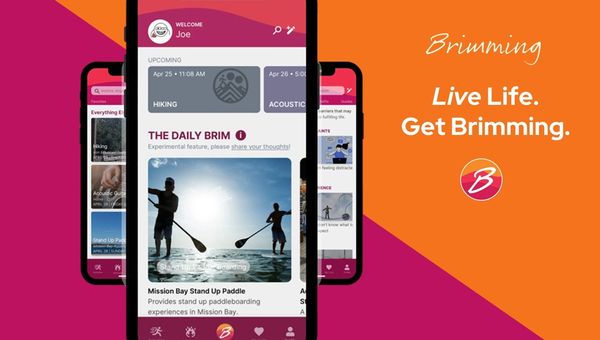
Brim Living (Brimming): Agentic AI for Real-World Growth
Brim Living’s Brimming app blends agentic AI and human expertise to help people build habits, stay motivated, and act on personalized recommendations—turning intention into lasting behavior change.
View case study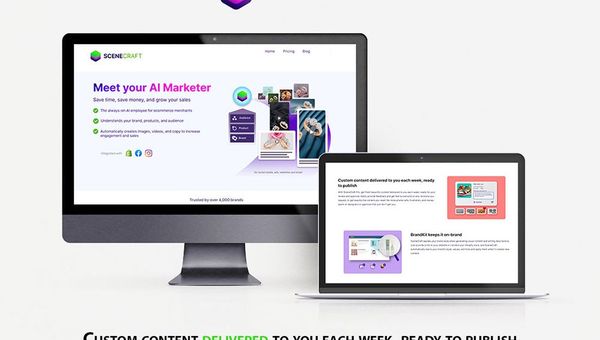
SceneCraft AI — Generate, Refine, and Publish Social Posts at Scale
Create on-brand posts in minutes: generate with custom models, refine with an AI-guided studio, add OpenAI copy, and publish to Instagram—optionally pulling products straight from Shopify.
View case studyWhere businesses usually run into friction before AI agents are implemented well
The problem is rarely just "we need a chatbot." It is usually a workflow problem with multiple moving parts - surfaced after manual processes, disconnected tools, or limited AI experiments fall short.
The most common pre-implementation friction points:
Fragmented systems, broken handoffs
Work spans CRM, helpdesk, ERP, Slack, email, and more. Without coordination, teams lose context, repeat work, and rely on manual follow-up.
Repetitive work consumes high-value time
Too much time goes to recurring questions, routing requests, and pushing tasks between tools - pulling experienced staff into low-value handling.
Weak routing, inconsistent execution
Poorly triaged requests land with the wrong people, delay next steps, and cause service quality to vary by shift or channel. Often a decision-logic issue, not a staffing one.
AI pilots that can't complete real work
Simple assistants and copilots often can't take action, apply business logic, or operate safely across real cases. The gap between demo and production value shows quickly.
Oversight missing or added too late
Without approval paths and escalation checkpoints, AI becomes hard to trust. But if every case needs manual review, automation value stays limited.
No visibility into system behavior
When runs, exceptions, and handoff points aren't observable, improving the workflow over time becomes difficult - leading to low trust and stalled adoption.
These are the kinds of problems that make AI agent implementation harder when teams try to solve them with manual processes or disconnected tools alone.
Why businesses move on this now instead of leaving it as a future project
The urgency is usually operational, not theoretical. Buyers start looking seriously at AI agent development when existing workflows become too expensive, inconsistent, or hard to scale with manual handling alone.
Workflow volume is growing faster than teams want to hire
Adding headcount alone is an expensive way to solve repetitive routing and handling. Businesses need to scale throughput without turning every gap into a hiring plan.
The systems are already in place, but the coordination is weak
The issue is not missing software - it is that CRM, helpdesk, dashboards, and messaging channels are not coordinated into a clear operating flow.
Leadership wants practical AI, not more prototypes
What matters now is whether the system can operate inside real business rules, support human control, and improve measurable workflow behavior.
Service consistency matters more when operations become multi-channel
As businesses expand across channels, inconsistency becomes more costly. AI agents offer a structured way to manage handling quality and coordination at scale.
What BitBytes builds when the goal is dependable AI execution inside a workflow
We approach AI agent development as an implementation problem - designed around the workflow, the systems involved, and the level of human control required.
Agents built around real process steps
We design agent workflows around how work actually moves - intake, decisions, actions, approvals, escalation, and closure. The goal is to improve the flow of work, not add AI in isolation.
Tool-connected systems that take action
The agent can update tickets, move tasks, trigger notifications, write back to a CRM, or push a case into a defined escalation path - not just respond.
Knowledge-grounded decision support
We use retrieval, policy lookup, and workflow-aware context so the system works with approved knowledge instead of relying on generic model behavior.
Human-controlled rollout and monitoring
We design for approvals, overrides, and checkpoints where judgment matters - then add monitoring so the workflow can be reviewed and improved over time.
How BitBytes typically delivers AI agent development services
The process is designed to move from business problem to production-ready workflow with enough structure to reduce risk and enough practicality to keep momentum.
Define workflow and business goal
Understand what workflow needs to improve, what systems are involved, and what agent pattern fits - separating real implementation opportunities from vague automation ideas.
Audit systems and constraints
Review tools, data sources, channels, approval requirements, and edge cases to determine what the agent can do directly and what should stay human-controlled.
Design orchestration and control logic
Translate the workflow into a delivery design - intake rules, routing logic, tool actions, escalation paths, and approval checkpoints.
Build and connect the systems
Implement orchestration, tool integrations, knowledge access, and action logic. Focus stays on how the workflow performs in a real operating environment.
Test with realistic cases
Validate the workflow using realistic scenarios - common requests, edge cases, and escalation paths. Improve reliability before broader rollout.
Launch, monitor, and improve
After rollout, monitor run behavior, outcomes, and exceptions. This creates a base for tuning and expanding the workflow over time.
Delivery Outcomes
What you get from this implementation process
What changes after implementation
Before implementation
After implementation
Requests move between teams through manual triage and inconsistent ownership
Requests are routed using defined logic, context, and escalation rules
Staff repeat the same updates and follow-up actions across multiple tools
Routine actions are coordinated through connected workflows and tool calls
Answer quality depends heavily on who handles the case
Responses and next steps are supported by grounded knowledge and workflow rules
Exceptions are either missed or escalate too late
Approval points and escalation checkpoints are designed into the process
Managers have limited visibility into where delays and failures happen
Runs, outcomes, and failure points are more observable and easier to review
AI experiments stay isolated from production operations
AI becomes part of a controlled, usable workflow with room for ongoing improvement
Operating environments where this service is especially useful
This offer is cross-industry, but it tends to create the most value in environments where workflow complexity, response consistency, and multi-system coordination matter.
Support-heavy service operations
Businesses with high volumes of customer or service interactions often benefit first because repetitive handling, routing, and follow-up work can be structured clearly and improved quickly.
Healthcare, travel, and other process-driven service environments
These environments often involve repeated requests, scheduling or status questions, policy-driven communication, and clear escalation needs. That makes them well suited to workflow-aware AI systems with human review where required.
Logistics, delivery, and coordination-heavy operations
Operations teams handling updates, exceptions, routing, and status communication across multiple systems can benefit when AI helps move work based on defined rules and context rather than ad hoc manual coordination.
Wellness and fitness platforms
Wellness and fitness businesses often need structured user journeys, personalized interactions, progress support, reminders, and ongoing engagement. AI agents can help make these experiences more responsive and easier to scale.
Marketing and content workflow teams
Marketing teams can benefit when AI supports multi-step workflows such as content generation, review, refinement, approvals, publishing, and campaign coordination across tools and channels.
Product-led SaaS teams adding agentic capability
For software products that need workflow assistance, internal operations support, or AI-enabled feature delivery, this service helps turn broad AI goals into concrete orchestration, integration, and rollout work.
What this is designed to improve once the workflow is implemented well
The value of AI agent development should show up in operational behavior, not just in interface novelty. These are the kinds of improvements qualified buyers usually care about.
Agent Quality
After deliveryWhat improves with AI agent implementation
Faster initial handling and next-step movement
When routing, context lookup, and routine actions are structured well, the system can reduce delays at the start of the workflow and move common cases forward faster.
More consistent service behavior across teams and channels
Knowledge-grounded responses, workflow rules, and action logic help reduce variance in how requests are handled across people, shifts, and communication channels.
Better use of human time
Teams spend less time on repetitive coordination and more time on exception handling, judgment calls, and cases where human context matters most.
Clearer escalation and approval behavior
Instead of leaving edge cases to guesswork, the workflow can define when to escalate, when to request review, and when a human should take over directly.
Stronger visibility into workflow performance
Monitoring, traces, and run reviews make it easier to see what the system is doing, where it fails, and what needs to improve over time.
A safer path to expanding AI into operations
Once one workflow is working well, the business has a more credible base for extending AI into related use cases without restarting from theory every time.
Where this service is a strong fit and where it usually is not
Best fit
Not the right fit
Businesses with repetitive support or operations workflows that already matter commercially
Teams looking only for a novelty chatbot with no clear workflow objective
Buyers who need integrations across CRM, helpdesk, ERP, dashboards, messaging, or internal tools
Projects that expect full autonomy with no human review, override, or escalation
Teams that want production-ready implementation with senior-led execution
Very small one-off tasks with no meaningful operational scope
Companies ready to define workflow ownership, business rules, and rollout goals
Buyers mainly comparing hourly rates or looking for free consulting disguised as discovery
Technical stack and delivery components
The stack should be understood by function first. Not every workflow needs every component in the same way, but serious AI agent development usually requires a clear relationship between orchestration, actions, context, integrations, human control, and monitoring.
Workflow orchestration layer
Manages multi-step execution, state, and flow logic. May use LangGraph, CrewAI, Temporal, n8n, or custom patterns depending on workflow shape.
Tool and action layer
Where the agent interacts with business systems - CRM updates, ticket changes, notifications, task movement, or workflow triggers via APIs.
Decision layer
Handles routing rules, thresholds, fallback behavior, escalation logic, and conditional branching - model-assisted or deterministic depending on the workflow.
Knowledge and context layer
Supports retrieval, policy lookup, and grounded responses via RAG pipelines, vector search, structured case context, and workflow-specific memory.
Integration layer
Connects to existing tools - CRM, helpdesk, ERP, dashboards, Slack, email, WhatsApp, and custom APIs that expose workflow data or actions.
Human control layer
Approvals, overrides, and escalation checkpoints designed to keep control where business risk or edge cases require human judgment.
Monitoring layer
Covers logs, traces, run monitoring, and evaluation - using observability tooling, workflow analytics, and scenario-based evaluation.
Frequently Asked Questions
Common questions about AI agent development services, what they include, and how to get started.
Start with a workflow that is worth improving
The technical discovery call is designed to clarify the workflow, systems, control requirements, knowledge sources, and rollout path so both sides can assess whether this should be handled as a retrieval-backed assistant, an action-taking AI agent, or a broader AI workflow system.
Schedule a Technical Discovery Call
with an AI Agent Development Expert