Validate the Right AI Use Case Before You Commit to a Full Build
BitBytes helps growing businesses test AI ideas through focused Proofs of Concept and turn validated opportunities into practical MVPs. This is designed for teams that need real feasibility, real workflow fit, and a credible path from pilot to production.







What AI PoC and MVP development really helps you validate
Whether the use case works in your actual workflow, not just in a demo environment.
Whether your data, integrations, and operational constraints support a viable first build.
Whether the right first phase is a scoped PoC, a pilot, or a market-facing MVP.
Whether internal stakeholders can align around measurable success criteria before larger spend.
Whether there is a clean path from validation to rollout without overbuilding too early.
Who this service is designed for
This service is best suited to teams that already have a meaningful use case, real operating constraints, and a need to validate or ship with discipline.
Support and operations leaders with workflow complexity
Teams handling high volumes of repetitive work across support, service, triage, routing, or internal coordination where AI needs to improve speed and consistency inside real processes.
Founders and general managers evaluating AI investment carefully
Leaders who want a credible first phase before committing budget to a broader AI initiative, especially when the use case spans multiple systems or teams.
CTOs and technical leads who need validation before full implementation
Technical buyers who want to test feasibility, data readiness, model behavior, and integration logic before hardening an architecture for production.
Product-led SaaS teams validating AI features
Teams with an existing product that need to test whether an AI capability deserves to become a shipped feature, without distorting the roadmap with an oversized first build.
GCC-facing and multilingual operating environments
Businesses that need AI systems to perform reliably across multilingual interactions, operational workflows, and channel-heavy service environments.
Lean software teams that need an execution partner
Teams with a clear direction but limited bandwidth to scope, validate, and ship the right first version without adding unnecessary overhead.
Why businesses move on AI PoC and MVP work now
This work usually becomes urgent when the business case is real, the pressure to validate is increasing, and guessing is more expensive than learning quickly.
They need to reduce wasted build spend
A focused validation phase helps teams avoid committing too early to the wrong use case, the wrong architecture, or the wrong product scope.
They need a faster answer on feasibility
When stakeholders are asking whether AI can actually work with current data, workflows, and systems, a PoC creates a clearer go or no-go decision.
They need to ship without overbuilding
Many teams already know the opportunity is real, but need help defining a first version that is usable, commercially sensible, and expansion-ready.
They need stakeholder alignment before rollout
A structured first phase gives product, operations, and technical teams a shared view of what success looks like and what should happen next.
They need AI to work inside real operations
Interest in AI is no longer enough. Buyers want validation tied to workflow reliability, human control, integration reality, and measurable operational value.
They need progress without consultancy drag
Serious teams often want a capable implementation partner that can move from discovery to delivery quickly, without long speculative pre-sales cycles.
Proof from product and AI delivery work that reflects real implementation thinking
BitBytes is best positioned when the work involves meaningful product logic, workflow fit, and a serious path from idea to working system.
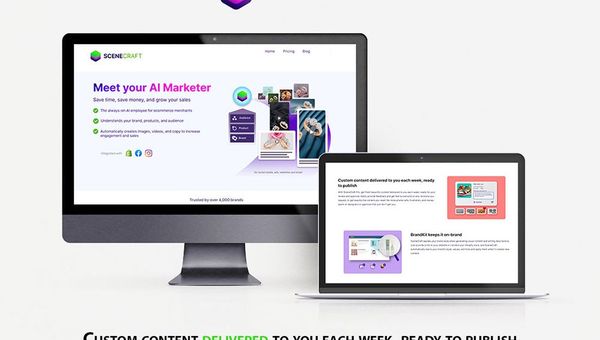
SceneCraft AI — Generate, Refine, and Publish Social Posts at Scale
Create on-brand posts in minutes: generate with custom models, refine with an AI-guided studio, add OpenAI copy, and publish to Instagram—optionally pulling products straight from Shopify.
View case study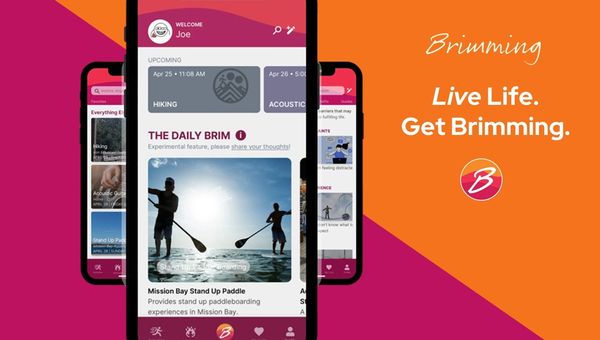
Brim Living (Brimming): Agentic AI for Real-World Growth
Brim Living’s Brimming app blends agentic AI and human expertise to help people build habits, stay motivated, and act on personalized recommendations—turning intention into lasting behavior change.
View case study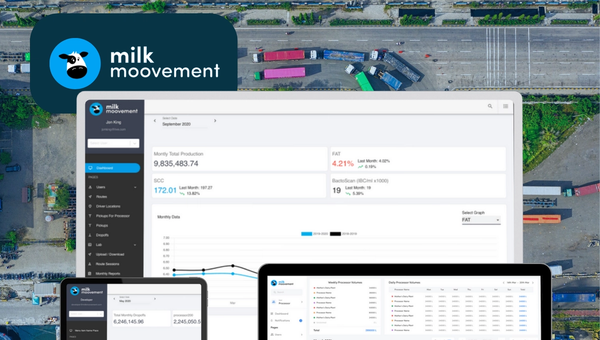
Milk Moovement: The Operating System for Modern Dairy Co-ops
Milk Moovement is a cloud platform that gives dairy co-ops a real-time command center—from farm pickup to plant intake. It streamlines routing and scheduling, unifies quality and volume data, and automates complex payments, replacing spreadsheets with a single source of truth. The result: fewer miles, faster payouts, and smarter decisions across the dairy supply chain.
View case studyWhat makes AI PoC and MVP work harder than it looks
The challenge is usually not coming up with an AI idea. It is deciding what to validate first, what to build now, and how to avoid spending on the wrong version of the solution.
The most common validation and delivery challenges:
The use case sounds promising, but the first step is still unclear
Many teams know the business problem is real but have not yet separated curiosity from a use case worth validating through delivery.
The data may exist, but readiness is uncertain
Documents, historical cases, structured records, and workflow inputs may be available, but not in a form that makes the first phase easy to test well.
Integration reality changes the scope
A concept can look simple until it has to interact with CRM, helpdesk, ERP, WhatsApp, internal tools, approval flows, or knowledge systems.
Teams struggle to define measurable validation criteria
Without agreed success metrics, a PoC becomes a vague experiment and an MVP becomes a bloated first release with no clear decision logic.
Early versions often try to do too much
Teams under pressure often compress too many features, too many edge cases, and too many stakeholders into the first phase, which weakens both learning and delivery.
There is no clear path from pilot to production
Even when a concept works, teams often lack a practical next-step plan for hardening, scaling, monitoring, or rolling it into existing workflows.
These are the kinds of problems that make early-stage AI delivery harder when teams try to move too fast without structured validation.
How BitBytes structures AI validation work so it leads somewhere useful
BitBytes approaches AI PoC and MVP work as a serious implementation problem. The goal is to validate the right thing, in the right sequence, with enough operational reality to support the next decision.
Use-case and scope definition before build work starts
The first move is to sharpen the business problem, isolate the best initial use case, and decide whether the right first phase is a PoC, pilot, or MVP.
Feasibility, data, and integration validation
Before too much is built, the work tests whether the required data exists, whether system interactions are realistic, and where technical or workflow constraints will shape scope.
Focused delivery around one meaningful validation goal
Instead of spreading effort across multiple speculative features, the first build is centered on one clear validation question tied to business value.
A practical path to the next phase
When the first phase succeeds, BitBytes helps translate the learning into the right next move, whether that means MVP hardening, workflow rollout, feature expansion, or embedded delivery support.
What the delivery process usually looks like
The process is built to create clarity early, validate quickly, and give the business a reliable next-step decision.
Define the business problem and desired outcome
The first step is to identify the workflow, product, or operational problem worth solving and what success should look like in practical terms.
Decide whether this should be a PoC or MVP
The engagement separates feasibility questions from launch questions so the scope matches the real decision the buyer needs to make.
Review data, systems, and workflow dependencies
This step checks what inputs are available, how the workflow really operates, and which integrations, controls, or human handoffs matter from the start.
Set scope boundaries and validation criteria
The build is framed around what will be tested now, what will wait, and which metrics, checkpoints, or stakeholder signals will be used to judge success.
Build the first version around one clear objective
BitBytes delivers a focused PoC or MVP designed to test meaningful value, not a vague technical demo or an oversized pseudo-product.
Test with stakeholders in a realistic operating context
The output is reviewed against expected behavior, workflow fit, operational usefulness, and the quality of the validation signal it produces.
Decide the next move with more confidence
The final step is to convert what was learned into a practical recommendation for rollout, MVP expansion, system hardening, or a no-go decision.
Validation Outcomes
What you get from this delivery process
Where this service tends to fit especially well
This offer is relevant anywhere the first phase needs to prove value inside a real workflow, not just show that a model can generate output.
Support-heavy service businesses
These environments often need AI for triage, routing, response support, or internal assistance where consistency and handoff logic matter.
Operations-heavy companies with multi-system workflows
Businesses running across several tools and approval flows often need validation work that reflects how real tasks move across teams and systems.
Healthcare and high-volume service environments
Where repetitive queries, coordination demands, and service responsiveness matter, an early validation phase helps identify which automation opportunities are actually worth building.
Logistics, travel, and coordination-heavy businesses
These environments often involve repetitive updates, status checks, exception handling, and channel-based communication that benefit from structured AI validation.
E-commerce, marketplace, and customer communication teams
When the challenge involves multilingual service handling, knowledge-backed responses, or support automation, a scoped first phase can clarify fit quickly.
Product-led SaaS teams building AI features
This service is also well suited to active software products where the business needs to test an AI capability before committing to a broader roadmap or deeper product integration.
What a good AI PoC or MVP engagement should leave you with
The real value is not just a first build. It is better decision quality, stronger implementation logic, and a more credible next move.
Validation Quality
After PoC/MVPWhat a good validation engagement delivers
A clearer go or no-go decision
The team leaves with stronger evidence on whether the use case deserves broader investment.
Lower wasted spend
Validation happens before the business commits to unnecessary architecture, oversized scope, or the wrong feature path.
Better internal alignment
Stakeholders have a more shared understanding of the use case, constraints, metrics, and what should happen after the first phase.
Stronger signal on workflow value
The engagement shows whether the concept improves speed, consistency, usability, or operational handling in a meaningful way.
A faster path to the right build
Instead of debating the idea in the abstract, the team can move forward based on real implementation learning.
Cleaner production planning
If the use case proves out, the next phase starts from a stronger base with clearer requirements, boundaries, and technical direction.
When this is a strong fit and when it usually is not
Best fit
Not the right fit
A meaningful business problem already exists and the team needs to validate the right first phase
The idea is still vague and there is no real use case, owner, or decision process
The use case touches real workflows, systems, or product logic and needs credible implementation thinking
The main goal is to get free consulting or open-ended discovery without delivery intent
Stakeholders want a disciplined PoC or MVP that can support a later rollout
The expectation is a cheap prototype with no concern for workflow fit, controls, or next-step planning
The buyer wants an engineering-led partner that can move from validation to execution
The decision is being made only on hourly rates or generic vendor comparisons
A practical stack for AI validation work that can still support the next phase
The stack should serve the validation goal first, then leave room for hardening and expansion if the use case proves out.
Application layer
Operator-facing dashboards, internal workflow tools, or lightweight customer-facing interfaces built around the validation flow. Common examples include React, Next.js, and TypeScript.
Backend / orchestration layer
The delivery base typically uses Python, FastAPI, Django, Node.js, or NestJS to manage application logic, APIs, workflow orchestration, and service interactions cleanly.
Model and tool layer
Depending on the use case, this may include OpenAI, Anthropic, Gemini, or selected open-source options, with prompt orchestration, tool calling, and evaluation logic where needed.
Retrieval / data layer
When the use case depends on knowledge-backed answers or document grounding, BitBytes can use PostgreSQL with pgvector, Pinecone, Weaviate, or OpenSearch, with hybrid retrieval only when it improves the result materially.
Integration layer
Real validation work often depends on APIs, GraphQL, webhooks, CRM, helpdesk, ERP, WhatsApp, internal dashboards, knowledge bases, and file-based data sources.
Evaluation / observability layer
Logging, QA checkpoints, prompt and response tracing, analytics, and tools such as Langfuse, LangSmith, OpenTelemetry, PostHog, or custom dashboards help teams evaluate what is actually working.
Recommended delivery base
The preferred commercial entry point is a fixed-scope implementation project for the validation phase, with optional paid advisory only where upfront solution design is genuinely necessary, followed by MVP hardening or rollout support if the use case is validated.
Frequently Asked Questions
Common questions about AI PoC and MVP development services, what they include, and how to get started.
Start with the right first phase
A good discovery conversation should help clarify whether the best next move is a PoC, a pilot, or an MVP, and what should actually be validated before more budget is committed.
Schedule a Technical Discovery Call
with an AI PoC & MVP Development Expert