Generative AI development services for businesses that need real systems, not AI demos
We design, build, and deploy production-ready generative AI systems - retrieval-backed assistants, AI agents, multilingual workflows, and AI-powered features that connect to the systems teams already use. For companies that want practical implementation with strong technical ownership and a realistic path to launch.






What generative AI development services should help you do
Identify the right use cases before development starts, not after time has already been spent.
Prepare workflows, knowledge, and data sources so the system can produce better outputs and fit real operations.
Build assistants, copilots, agents, and AI-powered features around live business systems, not isolated prompts.
Launch with clearer model choice, governance, handoff logic, and evaluation instead of hoping the prototype holds up.
Create a practical path from early concept or pilot activity into a production-ready system that can improve over time.
Generative AI work is strongest when it fits the workflow, the product, and the operating environment
These case studies show how BitBytes applies generative AI across very different business contexts - from multilingual assistants to productized AI workflows and agentic product experiences.
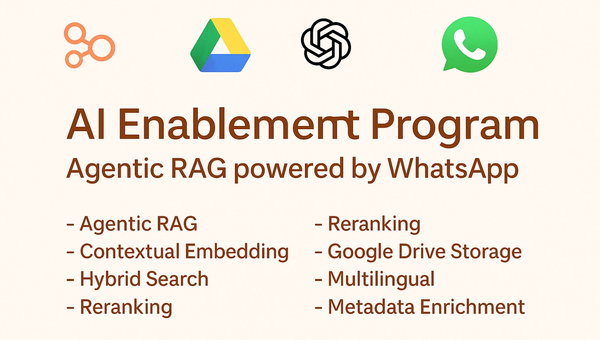
Agentic WhatsApp RAG for KSA — Accurate, Secure, Multilingual
WhatsApp-native Agentic RAG for KSA: auto-ingest from Google Drive, contextual embeddings with metadata enrichment, hybrid search with Cohere reranking, secure file links, and full Arabic/English support
View case study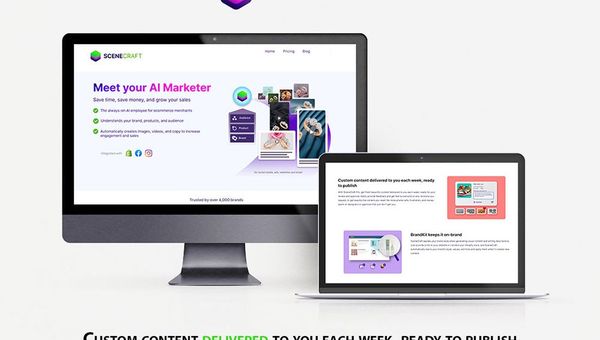
SceneCraft AI — Generate, Refine, and Publish Social Posts at Scale
Create on-brand posts in minutes: generate with custom models, refine with an AI-guided studio, add OpenAI copy, and publish to Instagram—optionally pulling products straight from Shopify.
View case study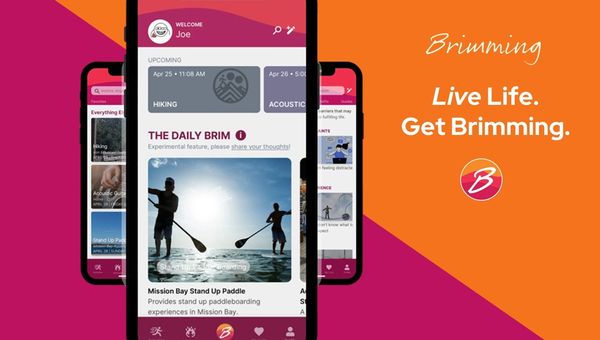
Brim Living (Brimming): Agentic AI for Real-World Growth
Brim Living’s Brimming app blends agentic AI and human expertise to help people build habits, stay motivated, and act on personalized recommendations—turning intention into lasting behavior change.
View case studyWhy generative AI projects stall before they create real value
Most teams do not struggle because AI feels irrelevant. They struggle because getting from idea to dependable implementation takes more than access to a model.
The most common pre-implementation friction points:
The first use case is still unclear
Many teams see several possible AI opportunities but have not yet identified which one is worth building first or how to scope it properly.
Data and knowledge are not ready
Information is often scattered across documents, tools, dashboards, and business systems, which makes output quality inconsistent from the start.
Generic tools do not fit the workflow
Off-the-shelf AI tools can help with simple tasks, but they usually fall short when the work depends on business logic, integrations, permissions, or multi-step actions.
Model choice and control are unresolved
Teams often hesitate when they are unsure which model to use, how outputs should be governed, and where review or escalation should happen.
Prototype quality does not hold up in production
A demo may look useful early, but production requires stronger architecture, evaluation, monitoring, and rollout discipline.
Internal teams do not have enough bandwidth
Even when the use case is clear, support, operations, and product teams often lack the time or implementation depth to move it forward properly.
These are the kinds of problems that make generative AI implementation harder when teams try to solve them with generic tools or disconnected experiments alone.
What BitBytes generative AI development services include
This service covers the practical work required to turn generative AI into a usable business system. The focus is on choosing the right use cases, preparing the right foundations, building around real workflows, and deploying with stronger control.
AI strategy and roadmap
Define where generative AI creates real value, which use cases come first, and how to phase delivery with focus.
Data and knowledge readiness
Improve knowledge structure, source quality, and data flow so AI systems perform reliably and stay useful as the business evolves.
Retrieval-augmented generation
Build RAG systems that connect models to business content and live sources for more grounded, current outputs.
GPT integration and customization
Bring GPT capabilities into workflows, internal tools, and product experiences with tailored prompts and response logic.
Business system integration
Connect generative AI to CRM, helpdesk, ERP, dashboards, APIs, and communication channels so it fits real operating environments.
Custom LLM development
Support tailored LLM implementations and selective fine-tuning where standard model behavior is not enough.
Multimodal AI solutions
Build systems that work across image, text, and structured inputs for richer product and operational use cases.
Deployment and governance
Roll out with response controls, review flows, monitoring, and governance that make the system easier to trust and improve.
The teams this service is best suited for
A good fit usually looks like a team with a real workflow problem, real systems to connect, and a real need to move from interest into delivery.
Support and CX leaders with high-volume requests
This is a strong fit for teams managing repeated queries across helpdesk platforms, CRMs, WhatsApp, and knowledge bases that need faster handling and stronger consistency.
Operations leaders reducing manual work
This works well when processes depend on several tools, handoffs are messy, and the business needs more automation without losing visibility or control.
GCC-facing and multilingual businesses
Teams serving Arabic and English workflows, or operating across channel-heavy support environments, often need more implementation care than generic AI tools can offer.
SaaS teams shipping AI into live products
This is relevant for product and engineering teams adding copilots, knowledge assistants, workflow agents, or AI-powered user features into software that is already live.
Lean engineering teams with roadmap pressure
Companies with a clear roadmap but limited internal bandwidth often use this service when they need senior execution support without building a larger team first.
Founders who want an implementation partner
This is best suited for buyers who want practical delivery, strong technical ownership, and a serious project path, rather than generic AI consulting or template chatbot packages.
How BitBytes moves generative AI from idea to working system
The process is designed to reduce ambiguity early, build around real workflows, and keep delivery grounded from the first step through launch and iteration.
Define the business problem and identify the right first use case
The first step is to clarify the business need, the workflow or product opportunity, the likely user, the operational constraints, and whether the opportunity is strong enough for a meaningful implementation engagement.
Audit data, knowledge sources, workflows, and system dependencies
BitBytes reviews the current process, source material, channels, integrations, permissions, handoff points, and data flow so the solution is built around how work actually happens.
Select the model approach and define governance
This step covers model selection, retrieval needs, tool use, response boundaries, review requirements, escalation logic, and the governance choices needed for the system to be useful without becoming difficult to trust.
Design and build the assistant, agent, or AI-powered feature
The delivery phase includes interface design, workflow logic, prompt and orchestration design, retrieval setup, integrations, and the implementation work needed for the defined scope.
Evaluate quality, test failure paths, and prepare for launch
Before rollout, the system is checked for answer quality, routing behavior, edge cases, human handoff, operational fit, and the monitoring or approval flows needed for safer use.
Launch, measure, and improve based on real usage
After deployment, BitBytes supports practical iteration through usage visibility, retrieval tuning, model or prompt adjustments, workflow improvements, and follow-on expansion where needed.
GenAI Delivery Outcomes
What you get from this implementation process
Global industries and operating environments where this service fits well
BitBytes does not need every buyer to look the same. The strongest fit is usually an environment where workflow complexity, knowledge access, and delivery reality matter more than AI novelty.
Healthcare and care coordination
Healthcare teams often need support around high-volume information requests, documentation-heavy processes, service coordination, and internal knowledge access.
Financial services and fintech
This service can be useful where teams need faster information handling, workflow support, internal knowledge access, and AI-enabled product experiences inside structured environments.
Retail and e-commerce
Retail and commerce teams often use generative AI for support workflows, product content, internal assistance, multilingual handling, and connected customer journeys.
Education and learning environments
This can support content workflows, learning assistance, documentation access, and operational coordination where knowledge delivery and user guidance matter.
Logistics and transportation
These teams often benefit when repetitive status requests, coordination workflows, internal information lookups, and multi-system processes need stronger automation support.
Technology, SaaS, and digital products
Product-led companies use this service when they need to add assistants, copilots, AI agents, or AI-powered features into active products without losing delivery discipline.
What this improves when the implementation is done well
The value of generative AI comes from how it improves the workflow, not from the model alone.
GenAI Quality
After deliveryWhat improves with proper implementation
A clearer path from idea to delivery
Teams get a more structured route from early interest or pilot activity into a scoped and buildable implementation.
Better output quality
Stronger data, retrieval, and knowledge foundations help the system produce more relevant and usable results.
More useful workflow integration
AI becomes more valuable when it works inside the tools and processes teams already rely on.
Better control in production
Model choice, review logic, governance, and evaluation make the system easier to trust and manage after launch.
Less friction across teams
Support, operations, and product teams can reduce repetitive work and improve handling across day-to-day workflows.
A stronger base for expansion
A serious implementation creates room for tuning, new use cases, and follow-on AI work instead of ending as a one-off experiment.
Why this becomes a priority now, not eventually
Most buyers do not move because AI is fashionable. They move because the operating pressure, product pressure, or delivery pressure has reached a point where waiting creates more drag than action.
The conversation has shifted from AI interest to AI execution
Many teams are no longer asking whether generative AI matters. They are asking which use case should be built first and what it will take to deploy it properly.
Existing tools are showing their limits
Basic AI add-ons and generic copilots often stop being enough once the work depends on internal data, workflow logic, multilingual handling, or deeper integrations.
Product expectations are moving faster
For software products, AI is becoming a more immediate roadmap question. Teams feel pressure to ship useful AI features without creating delivery chaos or architectural drift.
Operational inefficiency is easier to see now
As teams work across more tools, more documents, and more requests, the cost of fragmented knowledge and repetitive handling becomes harder to ignore.
Delaying the groundwork makes future implementation harder
The longer teams wait to organize data, define use cases, and plan governance, the more difficult it becomes to move from experiments into something dependable.
When this service is a strong fit and when it is not
Best fit
Not the right fit
A business with a clear workflow or product problem that generative AI could improve
A team looking for a cheap demo bot or a quick proof of concept with no real delivery path
A team that needs help assessing use cases, preparing data or knowledge, and turning the work into a buildable roadmap
A buyer that wants only generic AI brainstorming with no owner, no scope, and no implementation intent
An environment with meaningful integration, governance, handoff, or monitoring needs across live systems
A project that needs almost no workflow fit, no system connectivity, and no thought about model control
A company that wants an engineering-led partner for serious execution and possible follow-on improvement work
A buyer comparing providers only on hourly rate or looking for commodity staffing
Frequently Asked Questions
Common questions about generative AI development services, what they include, and how to get started.
Start with a practical conversation about fit, scope, and delivery
The next step is designed for teams that already see a real use case and want to understand what implementation would actually involve.
Schedule a Technical Discovery Call
with a Generative AI Development Expert