
TL;DR
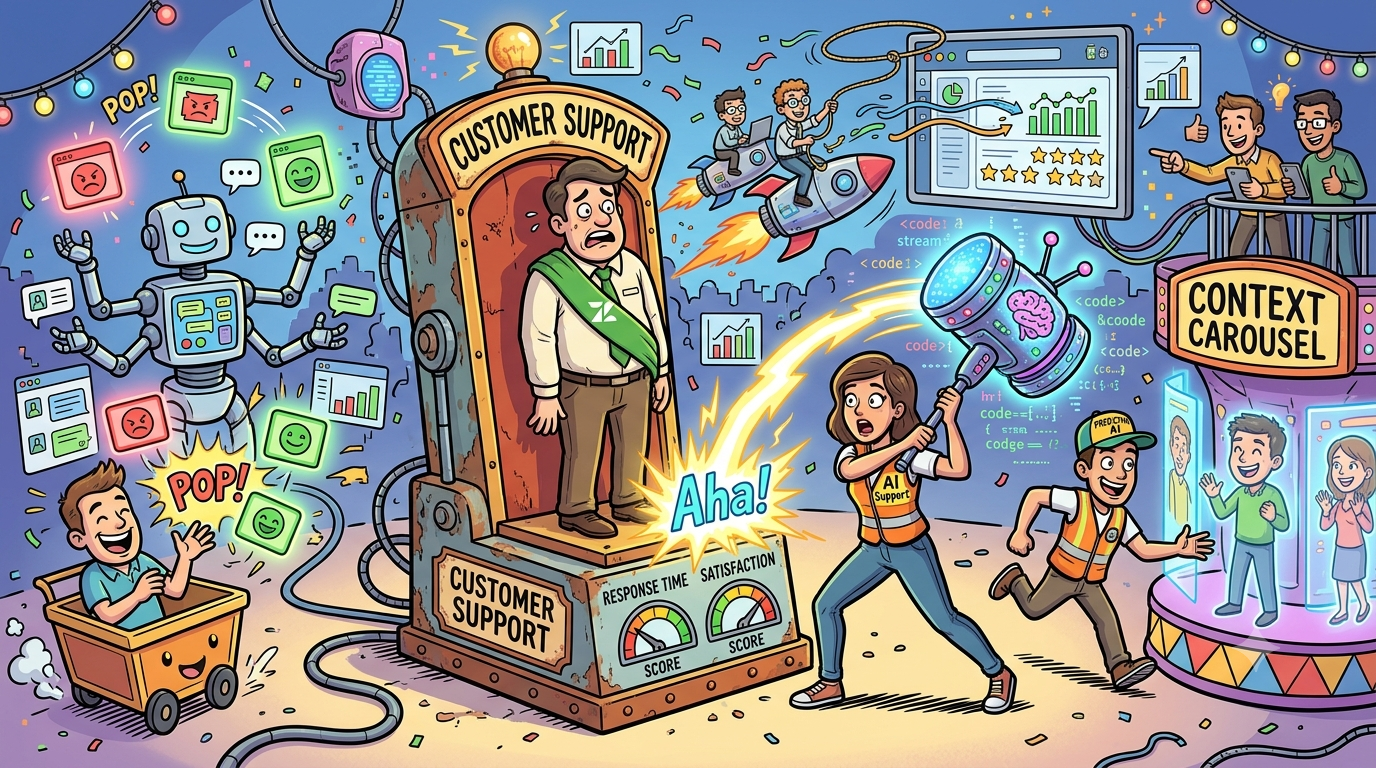
Zendesk's per-agent pricing climbs fast and its AI layer sits behind expensive add-ons, which is why support teams across SaaS, ecommerce, and B2B services are actively shopping alternatives. Five platforms stand out as serious replacements in 2026: Freshdesk Freddy for teams that want an all-in-one upgrade with enterprise muscle, Tidio Lyro for SMB ecommerce brands that need fast setup and a lean budget, Pylon for B2B SaaS companies whose customers live in Slack and Microsoft Teams, Decagon for high-volume enterprise operations ready to invest in a fully autonomous AI agent, and Gorgias for Shopify-first stores that need deep ecommerce actions inside every ticket. Each tool is covered below with verified pricing, capability breakdown, and a plain-English verdict on who should and should not use it. For a broader view of the competitive landscape, see our roundup of the best AI customer support platforms for SaaS and B2B.
Evaluating platforms vs building custom? BitBytes designs and ships production AI support agents tailored to your stack, data, and workflows. Talk to our engineers
Table of Contents
Quick Comparison Table
| Tool | Best For | Starting Price | G2 Rating |
|---|---|---|---|
| Freshdesk Freddy | All-in-one upgrade from Zendesk | $19/agent/mo (base); Freddy Copilot +$29/agent/mo | 4.4/5 (3,696 reviews) |
| Tidio Lyro | SMB ecommerce, fast AI deployment | Free tier; Growth $59/mo; Lyro add-on from $32.50/mo | 4.6/5 (1,880 reviews) |
| Pylon | B2B SaaS, Slack/Teams-first support | $59/seat/mo (Starter, 3-seat min); AI add-on ~$50/seat/mo | 4.9/5 (61 reviews) |
| Pylon | Enterprise, high-volume autonomous AI | ~$95K+/year (custom, sales-led) | Limited public reviews |
| Gorgias | Shopify/ecommerce helpdesk with AI | Basic $60/mo (300 tickets); AI resolutions $0.90 each | 4.6/5 (555 reviews) |
How We Evaluated These Tools
Every tool in this list was evaluated against six criteria that matter when you are actively switching from Zendesk.
1. AI resolution capability. Can the AI handle end-to-end conversations autonomously, or does it only assist human agents? We distinguish between AI Copilot (assists) and AI Agent (resolves) — understanding the difference between chatbot, AI agent, and conversational AI changes your operational model.
2. Channel coverage. Zendesk's weakest point is native support for Slack Connect and Microsoft Teams. We checked whether each alternative treats these as first-class channels or bolt-ons.
3. Transparent pricing. Tools with seat-based, ticket-based, or consumption-based pricing behave very differently at scale. We verified every price against live vendor pages in July 2026 and flagged where total cost of ownership diverges from headline pricing.
4. Ecommerce and CRM integrations. For teams migrating from Zendesk, the depth of Shopify, Stripe, and CRM integrations determines how much workflow you have to rebuild.
5. Time-to-value. How long does it take a 10-person team to go live? Self-serve onboarding, pre-built templates, and knowledge base ingestion speed all factor in.
6. Migration path. Does the platform offer data import from Zendesk? We note where this is available and where it requires manual effort.
What we excluded: Any tool that competes on paid search for this keyword, any tool where the brand itself was the named comparison subject, and any tool with insufficient public evidence of AI resolution capability in 2026. This keeps the list useful rather than promotional.
Freshdesk Freddy
What It Does
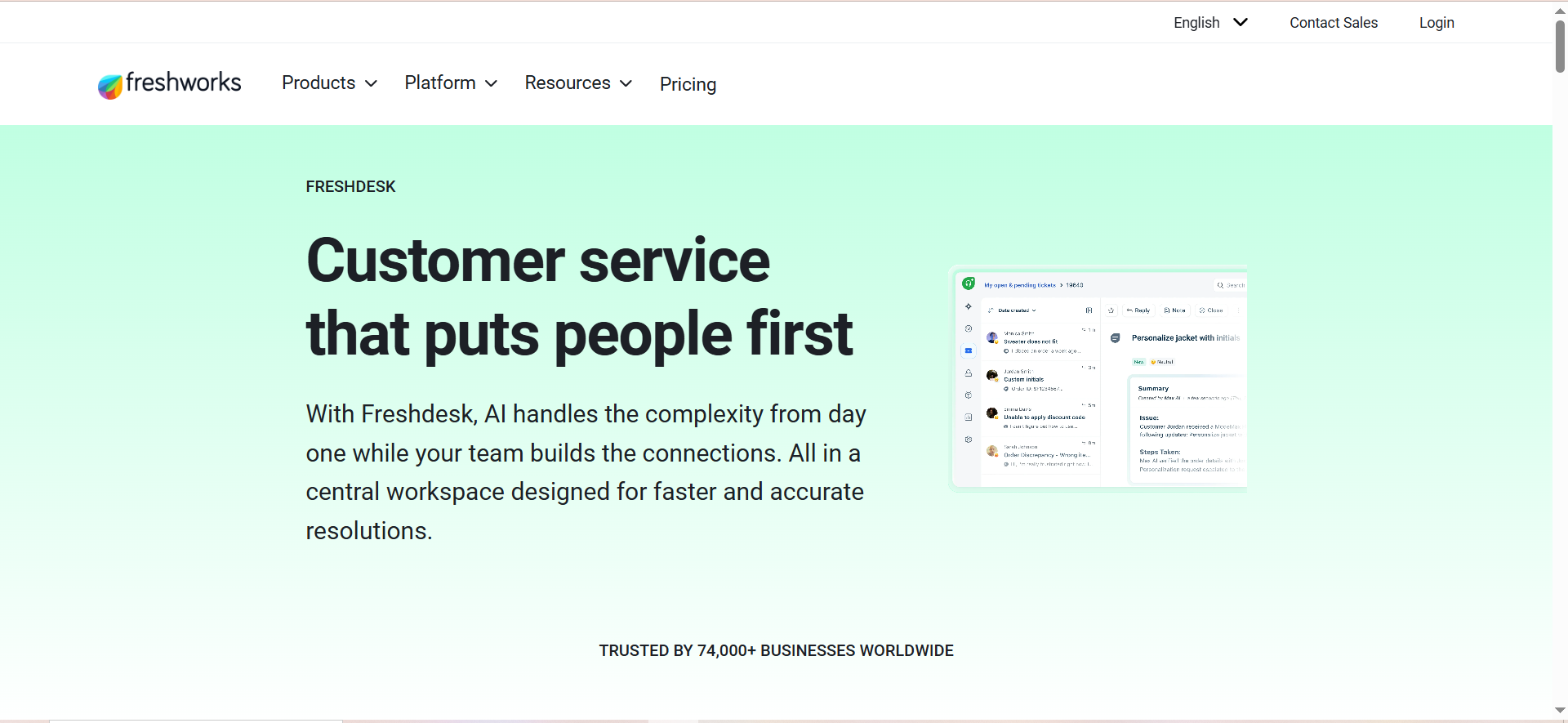
Freshdesk Freddy is Freshworks' AI layer built into the Freshdesk helpdesk platform. It operates across three distinct modules: Freddy AI Agent (autonomous resolution), Freddy AI Copilot (agent assist), and Freddy AI Insights (analytics). The underlying helpdesk handles email, chat, phone, and social channels on a single ticket view, making it the most direct like-for-like replacement for Zendesk in this list. For a detailed breakdown of how autonomous resolution agents like this work, see what AI customer support agents are and how they function.
Why Teams Use It
Teams switching from Zendesk to Freshdesk Freddy typically cite three reasons: lower per-agent base pricing, a cleaner automation builder, and the ability to consolidate helpdesk and AI inside one vendor contract rather than stacking tools.
Freddy AI Agent can go live in minutes using pre-built agentic workflows across email and web chat. It connects to Shopify, Stripe, PayPal, and FedEx out of the box, enabling the agent to process refunds, update orders, and verify customer details without escalating to a human.
Freddy AI Copilot assists live agents with real-time sentiment analysis, contextual reply suggestions drawn from similar past tickets, and live translation across 60-plus languages.
Zendesk vs. Freshdesk Freddy at a Glance
Freshdesk's core helpdesk scores 4.4/5 on G2 across 3,696 reviews vs. Zendesk's positioning as a more expensive enterprise tool. G2 users rate Freshdesk's Customer Interaction Automation at 9.2 vs. Zendesk's 8.7, and Help Desk functionality at 9.1 vs. Zendesk's 8.7. Source: G2 Freshdesk vs. Zendesk comparison
Key Capabilities
- Freddy AI Agent: Handles email, web chat, and messaging autonomously. Resolves queries end-to-end using pre-built workflows and backend integrations.
- Freddy AI Copilot: Real-time reply drafts, ticket summaries, sentiment flagging, and live knowledge base article creation from within the ticket.
- Freddy AI Insights: Trend detection, CSAT prediction, and performance analytics generated from conversation data. Currently free in beta with any Copilot license.
- Omnichannel inbox: Email, chat, phone, social, and WhatsApp on one ticket. See how this compares to other omnichannel AI support platforms.
- 50-plus agentic workflows: Pre-built for ecommerce (Shopify, Stripe, FedEx) and general support patterns.
- 30-plus language real-time translation within the agent interface.
Pricing
Freshdesk base plans (annual billing, per agent per month):
- Growth: $19
- Pro: $55
- Enterprise: $89
Freshdesk Omni (includes all channels):
- Growth: $29, Pro: $79, Enterprise: $119
Freddy AI add-ons (on top of base plan):
- Freddy AI Copilot: $29/agent/month (annual) or $35/agent/month (monthly). Available on Pro and Enterprise tiers only.
- Freddy AI Agent sessions: $49 per 100 sessions on classic Freshdesk email; approximately $0.10/session on Freshdesk Omni chat. Pro plan includes 500 free sessions to start.
- Freddy AI Insights: Free in beta with any Copilot license.
Real-world example: 15 agents on Pro ($55 each = $825/mo), 10 with Freddy Copilot ($29 each = $290/mo) costs $1,115/month before AI Agent session consumption. For a deeper look at how these AI support pricing models compare across platforms, including per-seat vs per-resolution structures, see our dedicated breakdown.
Free Tier
Yes. Freshdesk's Free plan supports up to 10 agents with basic ticket management. Freddy AI features are not included on the Free plan.
Downsides and Limitations
- AI is a paid add-on, not native. Copilot requires Pro or Enterprise base plan. Teams on Growth cannot access AI features.
- Session-based AI costs add up. High-volume operations paying per session can see AI costs scale unpredictably. Teams managing this challenge often find value in strategies to reduce customer support costs with AI without hurting CSAT.
- Customization ceiling. Advanced reporting and workflow customization can feel limited for complex enterprise needs without developer involvement.
- Slack and Teams are not first-class channels. Freshdesk handles these via integrations, not native inbox parity.
Best Fit
Mid-market and enterprise teams with mixed channels (email, chat, phone) who want a proven helpdesk with a credible AI layer at a lower price than Zendesk. Strong for teams with ecommerce backends on Shopify or Stripe.
Not a Fit
Teams whose customers primarily operate in Slack Connect or Microsoft Teams. Teams that need fully autonomous high-volume resolution and want to skip the per-agent pricing model entirely.
Tidio Lyro
What It Does
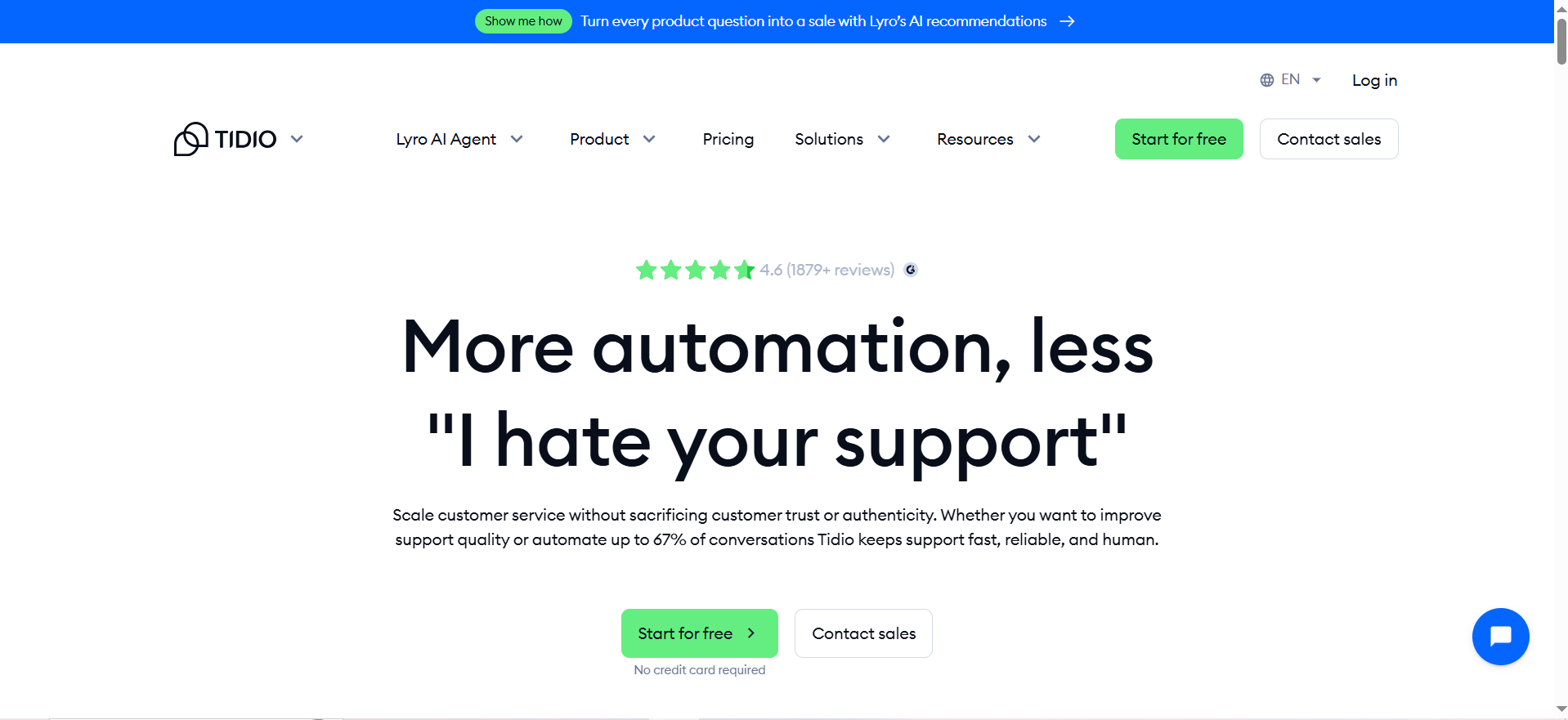
Tidio is a customer service platform built for small and mid-sized ecommerce brands. Its AI layer is Lyro, a Claude-powered conversational agent that reads your existing knowledge base, FAQ pages, and connected store data, then resolves customer questions autonomously. Tidio's strength is speed to value: non-technical teams can get Lyro answering customer questions within hours of setup, without training on intents or building complex flows. For teams weighing a purpose-built AI chatbot approach, our guide to the best AI chatbots for customer service in 2026 covers the full landscape.
Why Teams Use It
Tidio serves 300,000-plus customers globally, and the majority are ecommerce brands under $10 million in annual revenue. The appeal for Zendesk switchers at this scale: Tidio's entry pricing is dramatically lower, the AI setup requires no technical configuration, and the ecommerce integrations (Shopify order data, cart abandonment, product recommendations) are baked in rather than sold as enterprise modules.
Lyro Resolution Claims
Tidio markets Lyro as resolving "up to 67% of customer problems in seconds." This claim is based on internal aggregate data across Tidio's customer base. Resolution rate will vary significantly by industry, knowledge base quality, and query complexity. Treat it as an upper bound, not a guaranteed baseline.
Key Capabilities
- Lyro AI Agent: Reads FAQ pages, help articles, and website content. No intent mapping required. Handles order status, shipping questions, product availability, and return policy queries autonomously.
- Ecommerce actions: Shopify integration lets Lyro view cart and order history, recommend products, issue discount codes, and manage order updates from within the chat window.
- Omnichannel inbox: Aggregates web chat, email, Instagram Direct, Messenger, and WhatsApp into one view.
- Flows automation: Drag-and-drop rule-based chatbot builder for lead capture, FAQ deflection, and handoff logic. Separate add-on pricing.
- Analytics dashboard: Conversation volume, resolution rate, and CSAT tracking.
- 120-plus native integrations across ecommerce, CRM, email marketing, analytics, and review platforms. Zapier available.
Pricing
Base plans (monthly billing):
- Free: Up to 50 total Lyro conversations (lifetime cap on this tier).
- Starter: $29/month
- Growth: $59/month
- Plus: $749/month (Lyro conversations bundled at higher volumes)
- Premium: Contact sales (approximately $2,999/month, unlimited Lyro conversations)
Lyro AI add-on (on Growth and below):
- 50 conversations/month: $32.50/month
- Higher conversation volumes priced in tiers above this.
Annual billing saves approximately 17%.
Real-world cost: A mid-size Shopify store on Growth ($59/mo) adding Lyro at 200 conversations/month pays roughly $130 to $200/month all-in.
Free Tier
Yes. The Free plan includes 50 Lyro AI conversations total (not per month). This is sufficient for evaluation but not for production use.
Downsides and Limitations
- Conversation caps create unpredictable scaling costs. Each Lyro conversation is metered. A spike in support volume means an unexpected bill.
- The real cost is not the headline price. Lyro, Flows, and the base plan are billed separately. Most businesses pay materially more than the plan page suggests.
- Limited fit for B2B or high-complexity enterprise queries. Lyro performs best on factual, repetitive FAQ-type questions. Complex multi-step enterprise workflows require the Plus or Premium tier.
- No native Slack or Teams channel. Tidio is built for web chat and social channels, not enterprise messaging platforms.
- G2 reviews note limitations at scale. Users on Growth praise ease of setup, but users at Plus and above cite gaps in analytics depth and workflow customization.
Best Fit
SMB ecommerce brands (especially Shopify stores under $5 million annual revenue) with under 10 support agents, high FAQ-type ticket volume, and a need for fast deployment without technical resources.
Not a Fit
B2B SaaS companies, enterprise support operations with complex workflows, or any team where support volume will hit conversation caps frequently.
Pylon
What It Does
Pylon is an AI-native B2B customer support platform built specifically for SaaS companies whose enterprise customers communicate through Slack Connect, Microsoft Teams, and similar business messaging channels. Where Zendesk treats these channels as integrations you bolt on, Pylon treats them as primary inboxes. Every Slack thread, Teams message, email, or in-app chat routes into a unified ticket view with full context on the account, the stakeholder, and the conversation history. This is a prime example of agentic AI applied to customer service — where the platform acts on context rather than just reacting to keywords.
Why Teams Use It
B2B SaaS companies hit a specific wall with Zendesk: their enterprise customers do not want to file tickets. They want to ping you in Slack. Pylon is built for exactly that reality, and its G2 rating of 4.9/5 (the highest in this comparison) reflects strong satisfaction among the audience it targets.
Pylon's AI handles triage automatically, reads the incoming message, identifies the appropriate team, and routes it without manual intervention. The AI drafts replies with account context and prior conversation history attached. Account Intelligence surfaces health scores, risk signals, and product feedback trends across all customer accounts.
Why Pylon Scores 4.9 on G2
Pylon's 4.9/5 score across 61 G2 reviews is unusually high. The review pool skews toward early adopters and product-led growth teams, which tend to be vocal advocates. The review count is smaller than Freshdesk or Gorgias, so treat the rating as indicative rather than statistically comparable. Source: G2 Pylon Reviews
Key Capabilities
- Native Slack Connect support: Bidirectional sync between customer Slack workspaces and Pylon's ticket view. Agents reply from Pylon; customers see the reply in their Slack channel.
- Microsoft Teams integration: Available on Enterprise tier. Full bidirectional sync, same model as Slack.
- Additional channels: Email, in-app chat widget, WhatsApp, Telegram, Discord, SMS.
- AI triage and routing: Reads each incoming issue, assigns team, updates ticket fields automatically. Teams serious about deflecting volume before it reaches agents should review how AI ticket deflection works at scale.
- AI reply drafts: Contextual drafts with account history and prior ticket data surfaced automatically.
- Account Intelligence: Health scoring, risk detection, churn signals, and a unified stakeholder view per account.
- Product feedback aggregation: AI groups feature requests across conversations and maps them to specific customer accounts.
- Knowledge base AI: Detects gaps, drafts articles, and surfaces relevant answers before agents have to search.
Pricing
All plans require annual billing. No monthly option and no free trial.
- Starter: $59/seat/month (3-seat minimum, $177/month minimum)
- Professional: $89/seat/month (3-seat minimum, $267/month minimum)
- Enterprise: $139/seat/month (7-seat minimum, $973/month minimum)
Add-ons:
- AI Assistants: Approximately $50/seat/month on top of base plan.
- AI Agents: Starting at $100/month, scaling with issue volume.
- Account Intelligence Premium: $10/customer account/month (50-account minimum, $500/month minimum).
- Phone: +$35/seat/month.
Real-world cost: A 5-person B2B support team on Professional with AI Assistants pays $89 + $50 = $139/seat, or $695/month at minimum. Adding Account Intelligence Premium for 50 accounts adds $500/month.
Free Tier
No. Pylon requires an annual commitment with no free trial.
Downsides and Limitations
- Annual billing only. No ability to trial at low risk. You commit to a full year upfront.
- AI is a separate paid add-on. The base seat price does not include AI; AI Assistants and AI Agents are additional charges.
- Setup complexity. Users on G2 note that initial configuration can be cumbersome, particularly for complex Slack workspace structures.
- High minimum spend. The lowest possible spend is $177/month with no AI. Real teams with AI spend $500 to $1,500/month or more.
- Smaller review base. With 61 G2 reviews, the feedback pool is narrower than more established platforms.
Best Fit
B2B SaaS companies at Series A to Series C with enterprise customers who communicate primarily through Slack Connect or Microsoft Teams. Particularly strong for customer success and support teams that want account-level visibility alongside ticket management.
Not a Fit
Ecommerce brands, B2C companies, SMBs that cannot commit to annual contracts, or any team whose customers do not operate in Slack or Teams.
Decagon
What It Does
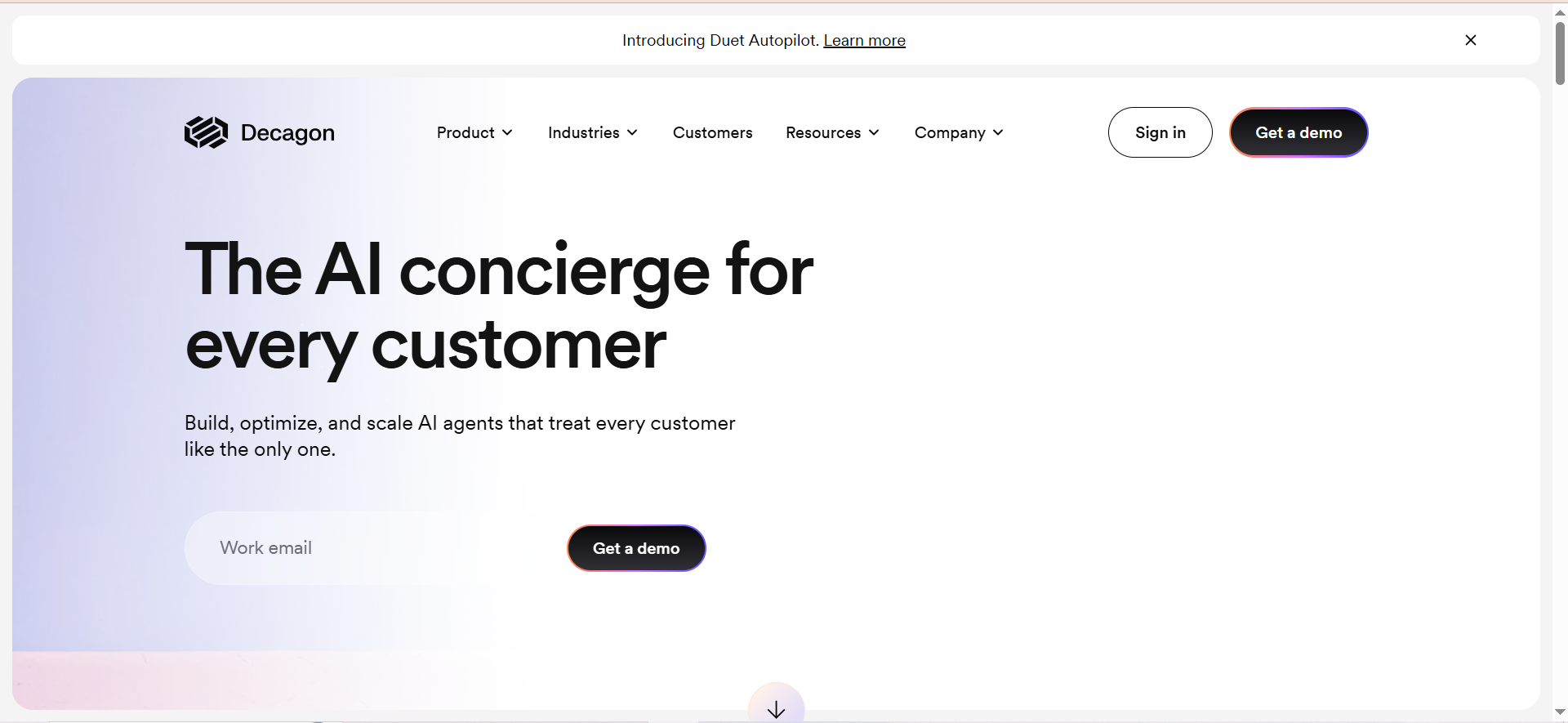
Decagon is an enterprise-grade autonomous AI agent platform for customer support. It does not follow the traditional helpdesk model. Instead of a human-agent-centric ticket system with AI bolted on, Decagon is designed to handle the majority of customer interactions end-to-end without human involvement. Human agents step in only for escalations, complex cases, or policy-sensitive decisions. Its target customers are mid-market and enterprise companies with high ticket volume, compliance requirements, and the budget to match. For a look at the top autonomous platforms in this category, see our list of the best AI customer support agents in 2026.
Why Teams Use It
Decagon's core proposition is resolution at scale. Its Agent Operating Procedures (AOPs) allow teams to define support workflows in natural language, which the platform compiles into production-ready automated procedures. The AOP Copilot (launched September 2025) can convert an existing SOP document into a live AOP in seconds. Watchtower QA monitors every AI interaction for quality, flags deviations, and feeds continuous improvement loops.
Decagon handles not just text but voice, with Voice 2.0 offering inbound and outbound calls with sub-second latency, customizable tone, and interruption handling. For enterprise operations running support across email, chat, and phone, this multi-modal capability is a significant differentiator.
Decagon Pricing Reality Check
Decagon has no public pricing page and requires a sales call to get a quote. The $50,000/year platform fee is reported consistently across third-party sources. Median contracts, per marketplace data, run approximately $400,000/year. If your annual support budget is under $100K, Decagon will not be a fit. Sources: Fin AI Decagon Pricing, Quiq Decagon Pricing
Key Capabilities
- Autonomous AI agent: Handles full conversations across email, chat, and voice. Connects to backend systems to process refunds, update account state, trigger workflows, and look up order history.
- Agent Operating Procedures (AOPs): Natural language workflow definitions that compile into executable support logic. AOP Copilot converts existing SOPs automatically.
- Watchtower QA: Continuous monitoring of AI conversations. Flags deviations, quality issues, and edge cases for human review.
- Decagon Voice 2.0: Inbound and outbound voice with sub-second latency. On the importance of that speed, see why sub-500ms response time matters for voice AI. Supports interruption handling, branded caller ID, and custom tone configuration.
- Proactive outbound agents: New in Spring 2026. Agents that initiate contact with customers based on triggers such as payment failures, shipment delays, or renewal events.
- Knowledge base integrations: Confluence, Contentful, Guru, Zendesk Help Center, Slack, and custom databases. For how to get the most from these connections, see our guide to the best AI knowledge base tools for customer support.
- Ecommerce and payments: Shopify order lookup, Stripe payment processing.
- Voice infrastructure: Amazon Connect, RingCentral, and SIP trunking.
- Agent Assist (Zendesk): Human agent copilot feature available for Zendesk-integrated deployments.
- A/B testing and AI debugging workbench (launched Spring 2026).
Pricing
- Platform fee: Approximately $50,000/year (confirmed across multiple third-party sources).
- Usage fees: Per-conversation or per-resolution billing on top of the platform fee. One reported per-resolution rate is $0.50 (negotiated enterprise rate).
- Median contract: Approximately $400,000/year per marketplace data.
- Starting cost: Approximately $95,000/year all-in for smaller enterprise deployments.
- Pricing model: Custom quotes only, sales-led. No public pricing page, no self-serve signup.
Free Tier
No. Decagon is enterprise-only with no free trial and no self-serve access.
Downsides and Limitations
- High cost floor. Minimum spend of approximately $95,000/year makes Decagon inaccessible for companies below a certain scale.
- Sales-led process. No way to evaluate the product without a discovery call and a custom proposal. Time-to-evaluation is measured in weeks.
- Limited public reviews. G2 has a small number of reviews. Less public third-party validation than Freshdesk or Gorgias.
- Customization limitations noted by users. Some G2 reviewers flag that tailoring specific behaviors and filtering capabilities requires vendor involvement.
- No Capterra presence. Decagon has not set up a Capterra product page, which limits independent review visibility.
Best Fit
Enterprise and high-growth mid-market companies with annual ticket volume in the hundreds of thousands, a meaningful support ops budget, and a mandate to reduce headcount costs through automation. Particularly strong for companies that need voice alongside digital channels.
Not a Fit
SMBs, startups, or any team that cannot commit to $95,000-plus annually. Also a poor fit for teams that want to self-serve their way through evaluation before speaking to sales.
Gorgias
What It Does
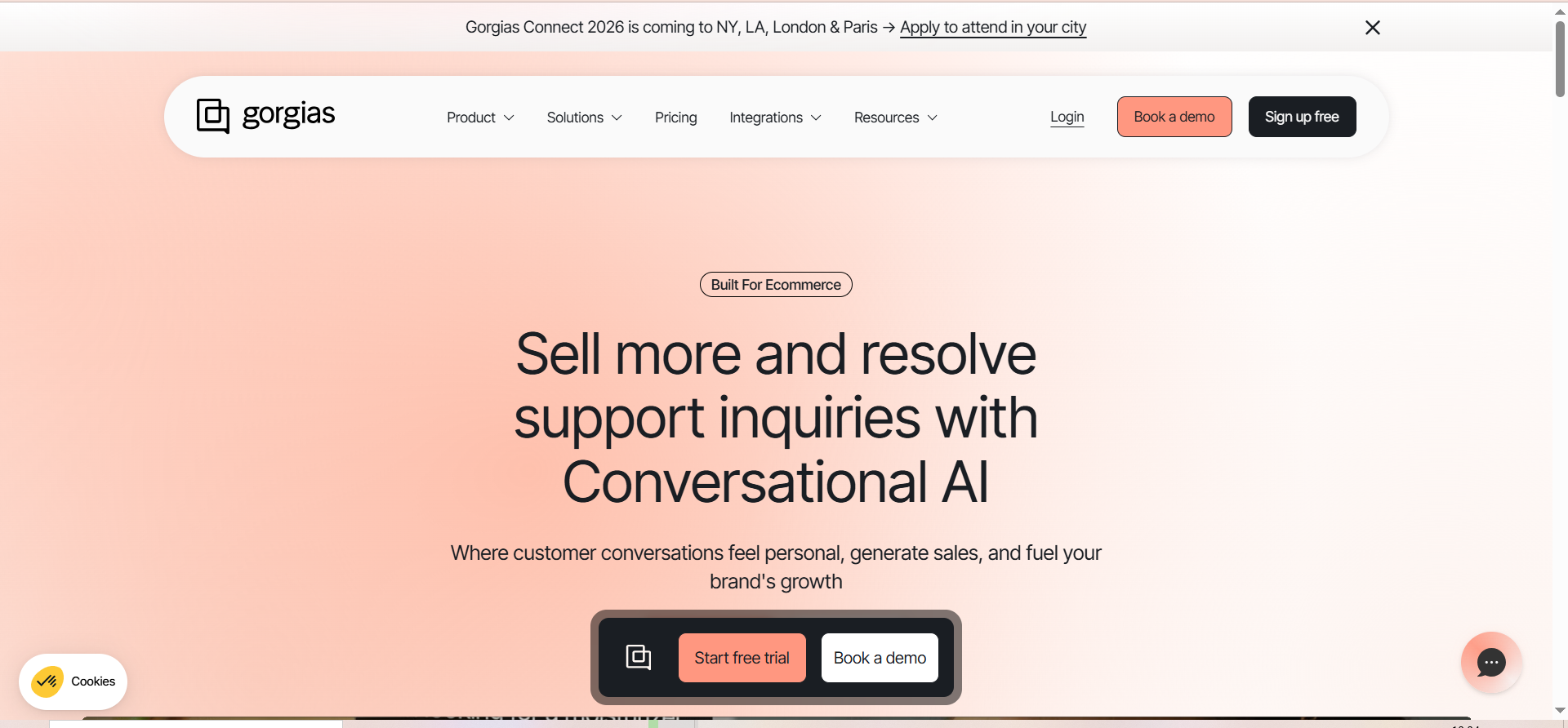
Gorgias is a helpdesk and AI agent platform built exclusively for ecommerce. It is the only tool in this comparison with a vertical focus: every feature, integration, and pricing model is designed around the needs of online retail brands. Its deepest integration is with Shopify, where Gorgias ingests order history, product catalogs, inventory levels, and customer tags in real time, and allows agents (or the AI) to issue refunds, cancel orders, edit shipping addresses, and duplicate orders directly from inside the ticket view. For a broader look at AI tools built for this vertical, see our roundup of the best AI customer support tools for ecommerce in 2026.
Why Teams Use It
Ecommerce brands switch from Zendesk to Gorgias primarily because Zendesk treats Shopify data as a sidebar integration, not a native capability. In Gorgias, the customer's order history is not a tab you open separately. It is the center of every ticket. The AI agent handles common post-purchase queries (order tracking, returns, refunds) and now also operates as a pre-purchase shopping assistant (product recommendations, discount offers for high-intent visitors).
Pricing by ticket volume, not by seat, means the whole team can use Gorgias without worrying about per-agent license costs.
Gorgias Pricing Model
Gorgias is the only tool in this comparison that charges by ticket volume, not by agent seat. This benefits large teams with multiple agents, but can make costs unpredictable in high-traffic periods. A brand on the Pro plan ($360/mo for 2,000 tickets) that automates 30% of tickets with AI pays the Pro base plus AI resolution fees ($0.90/resolution), resulting in approximately $720/month real-world cost (nearly 2x the headline). Source: eesel AI Gorgias Pricing
Key Capabilities
- Shopify-native integration: One-click setup. Order history, inventory, customer tags, and subscription data available inside every ticket. Agents can cancel, refund, reship, edit, and duplicate orders from one tab.
- AI Support Agent: Handles post-purchase queries end-to-end. Automations cover order tracking, return initiation, refund processing, and shipping address updates.
- AI Shopping Assistant: Pre-purchase channel. Recommends products, presents discounts for high-intent visitors, and captures leads for abandoned carts.
- WhatsApp Cart Recovery: Launched Spring 2026. Recovers abandoned carts via WhatsApp outreach.
- Intent-based discounting: Launched Spring 2026. AI detects purchase intent signals and automatically applies configured discount tiers.
- Unlimited agents on all plans. Pricing is per ticket, not per seat. The whole company can log in without adding to the license cost.
- 100-plus ecommerce integrations: Shopify, BigCommerce, WooCommerce, Magento, Klaviyo, ReCharge, Attentive, and more.
- Multi-brand management: Manage multiple Shopify stores from a single Gorgias dashboard.
Pricing
All plans include unlimited agents. Billed monthly (annual saves approximately 16%):
- Starter: $10/month, 50 tickets, $0.40/additional ticket
- Basic: $60/month, 300 tickets, $0.40/additional ticket
- Pro: $360/month, 2,000 tickets, $0.36/additional ticket
- Advanced: $900/month, 5,000 tickets, $0.36/additional ticket
- Enterprise: Custom, 5,000+ tickets, $0.32/additional ticket
Annual billing:
- Basic: $50/month, Pro: $300/month, Advanced: $750/month
AI Agent resolutions (add-on on all plans):
- Monthly billing: $1.00 per automated resolved conversation
- Annual billing: $0.90 per automated resolved conversation
Important note: An AI-resolved conversation can be billed as both a ticket (against your plan allowance) and an AI resolution (at $0.90 to $1.00 extra). Confirm with Gorgias sales how this double-billing scenario applies to your contract.
Free Tier
No standalone free plan. Starter at $10/month is effectively a low-cost trial tier for very small operations.
Downsides and Limitations
- Ticket-based pricing creates unpredictable monthly costs. Busy seasons (Black Friday, holiday) spike ticket volumes and bills simultaneously.
- AI resolution fees add materially to the base plan. Real cost is typically 1.5x to 2x the headline plan price once AI resolutions are counted.
- Ecommerce-only. Gorgias has no fit for B2B SaaS, professional services, or any non-ecommerce support operation.
- Reporting limitations. G2 reviewers consistently flag weak analytics and reporting compared to more full-featured helpdesks.
- Shopify-heavy. The integration depth with non-Shopify platforms (BigCommerce, WooCommerce) is solid but not as deeply native as Shopify.
Best Fit
Ecommerce brands of all sizes on Shopify (primary) or BigCommerce/WooCommerce (secondary) that want a helpdesk where the store data is the UI, not an afterthought. Particularly strong for direct-to-consumer brands that handle high volumes of post-purchase queries and want to automate order actions without leaving the ticket.
Not a Fit
B2B companies, SaaS teams, professional services, or any support operation not built around ecommerce order data.
Decision Framework: Which Tool Fits Your Team?
Use this matrix to map your situation to the right platform. Answer the three questions and follow the path.
Step 1: What is your business model?
- Ecommerce brand (sells physical or digital products online) → go to Step 2A
- B2B SaaS or professional services → go to Step 2B
- Mixed or unclear → consider Freshdesk Freddy as the safest all-in-one starting point
Step 2A: You are an ecommerce brand. What is your annual revenue?
- Under $5 million annual revenue, under 10 agents, Shopify-first → Tidio Lyro
- Why: Fastest setup, lowest cost floor, Lyro handles FAQ-heavy SMB traffic, Shopify integration covers the basics
- $5 million to $50 million annual revenue, Shopify as primary stack → Gorgias
- Why: Ticket-based pricing scales with volume, Shopify integration depth is unmatched, AI agent handles post-purchase queries natively
- $50 million-plus annual revenue, multi-channel, high ticket volume → Freshdesk Freddy or Decagon
- Freshdesk Freddy if you need omnichannel at predictable per-agent cost
- Decagon if autonomous AI resolution and voice are required and budget is $95K-plus annually
Step 2B: You are a B2B SaaS or professional services company. What are your customers' primary channels?
- Customers primarily use Slack Connect or Microsoft Teams for support → Pylon
- Why: Native bidirectional Slack and Teams sync. No other tool in this list treats these as primary inboxes
- Customers use email and web chat, low ticket volume, tight budget → Freshdesk Freddy
- Why: All-in-one at lower price than Zendesk, strong email and chat handling, AI layer available on Pro
- High ticket volume, budget $95K-plus annually, need autonomous AI at scale → Decagon
- Why: Full autonomous resolution, voice capability, enterprise SOC and compliance posture, Watchtower QA
Step 3: Validation check
Before committing, verify these three things against your shortlisted tool:
- Run a migration audit. Export your Zendesk ticket data and check whether your shortlisted tool has a native import path or requires a third-party migration service. Our build vs buy assessment guide can also help you decide when building a custom solution makes more sense than purchasing any of these platforms.
- Stress-test the AI on your actual queries. Use a trial or sandbox to feed the AI your 50 most common ticket types. Resolution rate on your real queries matters more than marketing claims.
- Calculate your 12-month TCO. Include base plan, AI add-ons, seat minimums, overage fees, and any professional services or migration costs.
Not sure any of these fit your stack? BitBytes builds custom AI support solutions on open-source and API-first architectures. We spec, build, and ship production agents that fit your data model, not the other way around. Get a build-vs-buy assessment
Fan-Out: Questions Teams Ask When Switching from Zendesk
Is it actually possible to migrate from Zendesk without losing ticket history?
Yes, though the effort varies by tool. Freshdesk offers a migration service (Help Desk Migration is a third-party partner commonly used) that imports tickets, contacts, organizations, and attachments from Zendesk exports. Gorgias has a documented Zendesk import path but focuses primarily on ticket and contact data; complex macros and triggers require manual recreation. Pylon and Tidio handle data migration on a case-by-case basis through their onboarding teams. Decagon's white-glove onboarding includes migration support as part of the contract. The rule of thumb: budget 2 to 4 weeks for migration, even with tooling support. The riskiest part is not ticket data; it is recreating automation logic and trigger rules that have accumulated over years of Zendesk use. Teams that want continuity during transition often run a parallel support setup, a pattern also used when deploying AI for round-the-clock customer support.
How do AI resolution rates compare across these platforms?
Published resolution claims range from Tidio Lyro's "up to 67% of customer problems resolved" to Freshdesk Freddy AI Agent's "up to 80% of queries on chat and messaging." These are upper bounds drawn from internal aggregate data, not guaranteed baselines. Resolution rate is highly dependent on the quality of your knowledge base, the complexity of your query mix, and how clearly your AI is instructed to escalate. In practice, teams with well-maintained FAQs and high-volume repetitive queries (order status, return policy, shipping ETAs) see better results than teams with complex multi-step or policy-sensitive queries. Benchmark against your own query distribution before selecting a tool based on resolution rate claims. For independent benchmarks, our AI customer service statistics for 2026 pulls verified data across the industry.
What happens when Zendesk's contract renews and you have not migrated yet?
Zendesk contracts auto-renew, and the cancellation window is typically 30 days before the renewal date. Missing that window locks you in for another year. If you are in the evaluation phase, set a calendar alert at 90 days before your renewal date to complete your shortlisting, 60 days to complete trials, and 30 days to notify Zendesk of non-renewal in writing. The migration itself should run in parallel, not sequentially, so you are ready to cut over before the old contract ends.
Do any of these tools support HIPAA or SOC 2 compliance?
Freshdesk and Gorgias both offer SOC 2 Type II compliance documentation. Freshdesk's Enterprise tier includes HIPAA-eligible configurations. Pylon has SOC 2 Type II certification. Decagon's enterprise contracts include SOC 2 compliance and offer HIPAA Business Associate Agreements (BAAs) for regulated industries. Tidio Lyro is GDPR-compliant but does not currently offer HIPAA BAAs or SOC 2 Type II certification, which limits its fit for regulated industries. For teams in healthcare or other regulated verticals, see our guide to HIPAA-compliant AI customer support platforms. Always verify compliance posture directly with the vendor before signing, as certifications can change between audit cycles.
How long does it realistically take to go live on a new support platform?
For Tidio Lyro: a Shopify brand with an existing FAQ page can go live in under a day. For Freshdesk Freddy: basic setup takes 1 to 2 weeks; getting Freddy AI Agent configured with backend integrations takes 2 to 4 weeks. For Gorgias: Shopify integration and basic routing takes 1 to 3 days; full macro and automation recreation from Zendesk takes 2 to 3 weeks. For Pylon: connecting Slack workspaces is fast; full onboarding including AI configuration and Account Intelligence setup takes 2 to 4 weeks. For Decagon: the enterprise onboarding process is measured in months, with white-glove AOP setup and QA validation standard before go-live.
Can any of these tools handle both B2B and B2C support from one platform?
Freshdesk Freddy is the most viable option for hybrid B2B/B2C support operations. Its omnichannel helpdesk handles email, chat, phone, and social media (B2C patterns) alongside account-level organization management (B2B patterns). Gorgias is ecommerce-only and does not support B2B account management. Pylon is B2B-only and does not have the ecommerce integrations to support B2C transactional queries effectively. Tidio is consumer-focused and lacks the account intelligence layer for B2B account management. Decagon is channel-agnostic at the AI layer but is enterprise-priced and not designed for the high-volume repetitive B2C query patterns that define ecommerce support.
FAQs
Tidio Lyro offers the lowest entry cost: a Free plan with 50 total Lyro conversations, and a Growth plan at $59/month with Lyro available as an add-on from $32.50/month per 50 conversations. For a small Shopify store with manageable support volume, the total cost can sit under $100/month, which is substantially lower than any Zendesk plan with AI capabilities. The caveat is that Lyro's conversation limits require careful volume management. For teams that outgrow SMB scale, Freshdesk Freddy's Growth plan at $19/agent/month (AI requires Pro at $55/agent/month) is the next entry point. Looking ahead, understanding where AI in customer service is heading over the next two years can help you pick a platform with the right trajectory.
Pylon is the strongest choice for B2B SaaS teams whose enterprise customers communicate through Slack Connect or Microsoft Teams. No other platform in this comparison treats these channels as primary inboxes with bidirectional sync. If Slack and Teams are not the primary customer channels, Freshdesk Freddy is a solid all-in-one alternative with a lower per-agent price than Zendesk and a capable AI layer on its Pro and Enterprise tiers. Teams running higher contact volumes should also evaluate our list of the best AI contact center platforms in 2026.
It can, if the migration is not managed carefully. The safest approach is a parallel-run period: keep Zendesk active for incoming tickets while your new platform is being configured and tested. Most teams run parallel systems for 2 to 4 weeks. The biggest risks to customer experience during migration are: automation gaps (triggers and macros that were in Zendesk and have not been recreated), knowledge base gaps (if the new platform's AI is trained on an incomplete knowledge base), and routing errors (tickets going to the wrong team during the transition). A documented runbook for migration, with sign-off from your support team lead, reduces all three risks.
Gorgias works with Shopify, BigCommerce, WooCommerce, and Magento. However, its deepest integration and the majority of its AI action capabilities are built around Shopify. BigCommerce and WooCommerce integrations provide order data and customer history inside tickets, but the real-time action capabilities (canceling orders, editing shipping addresses, issuing refunds from the ticket) are most complete on Shopify. If your stack is not ecommerce-based, Gorgias is not designed for you regardless of your ecommerce platform.
Decagon is designed to handle the majority of interactions autonomously, with human agents handling escalations and edge cases. The proportion of tickets that can be fully automated depends on your query mix, how well your AOPs are configured, and the quality of your backend integrations. Decagon does not promise 100% automation, and companies that have deployed it publicly maintain human oversight through Watchtower QA monitoring. A realistic outcome for a well-configured enterprise deployment is 60 to 80-plus percent autonomous resolution, with the remainder escalated to human agents. The economics of Decagon's pricing model require high automation rates to justify the $95,000-plus annual cost.
Three factors predict internal adoption more reliably than feature lists. First, channel fit: agents adopt tools that work in the channels they already use. If your team spends their day in Slack, a tool with native Slack integration (Pylon) will see faster adoption than one that requires switching to a separate inbox. Second, setup overhead: tools that require weeks of configuration before agents can use them see lower adoption than tools where agents can be productive on day one. Third, AI trust: if the AI drafts replies that agents regularly override or correct, adoption of AI features drops. Teams evaluating this layer specifically should look at AI agent assist and copilot tools for support teams as a parallel consideration. Run a realistic pilot with your actual ticket types before committing.
Chose a platform but need integration help, or outgrew off-the-shelf? BitBytes has shipped production AI support systems for SaaS and ecommerce companies. Whether you need Zendesk migration support, custom AI agent development, or help integrating your new platform into your existing data stack, we scope and build it. Book a scoping call with BitBytes