AI consulting services for teams that need a clear path from AI ideas to practical implementation
BitBytes helps founders, product leaders, operations teams, and transformation stakeholders evaluate where AI fits, which use cases are worth pursuing, what technical approach makes sense, and how to move toward rollout with less delivery risk.





Who AI consulting services are best suited for
This service is meant for buyers who need clarity before committing budget, team time, or technical direction.
Product leaders evaluating AI-enabled features
This is designed for heads of product, product managers, and product owners exploring how AI can improve user workflows, differentiate the product, or support new experiences. AI consulting helps define the right use case, system design direction, and delivery path before development begins.
Operations leaders trying to reduce manual work
This is best suited for teams dealing with repetitive workflows, fragmented knowledge, internal bottlenecks, or service-heavy processes. AI consulting helps identify where automation, assistants, or AI-supported workflows can reduce friction without disrupting core operations.
Founders and leadership teams deciding what to build first
Teams often use this when they have multiple AI ideas but no clear prioritization logic. The goal is to rank opportunities, understand tradeoffs, and choose the next move based on business value, feasibility, and implementation risk.
Innovation and transformation teams preparing AI rollouts
This helps teams that need a structured way to move from internal exploration to an actionable roadmap. AI consulting supports cross-functional alignment around use cases, architecture direction, governance considerations, and rollout planning.
Businesses with data, workflow, or integration complexity
A good fit usually looks like an organization with scattered knowledge, multiple internal systems, or unclear data readiness. AI consulting helps surface constraints early so teams can avoid weak pilots or fragile implementation decisions.
What AI consulting services help you clarify before you build
Which AI use cases are commercially useful and worth prioritizing first.
Whether your initiative is better suited to RAG, agents, automation, chatbots, or a narrower pilot.
What technical constraints, data dependencies, and integration realities need attention early.
How to move from AI exploration to an implementation roadmap, pilot scope, or MVP plan.
Where BitBytes consulting can transition into hands-on delivery across adjacent AI services.
What similar AI engagements can reveal before and during implementation
The strongest consulting work does more than produce recommendations. It helps teams frame the real problem, choose the right technical pattern, and build toward an approach that fits the business context.
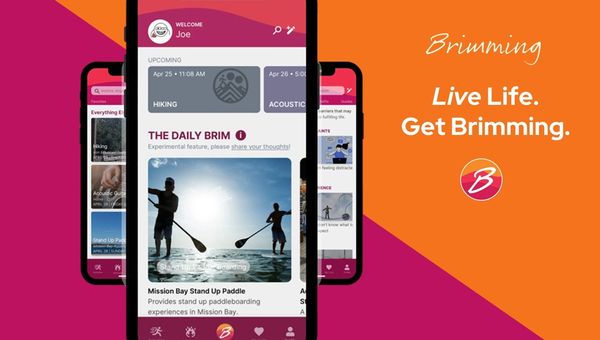
Brim Living (Brimming): Agentic AI for Real-World Growth
Brim Living’s Brimming app blends agentic AI and human expertise to help people build habits, stay motivated, and act on personalized recommendations—turning intention into lasting behavior change.
View case study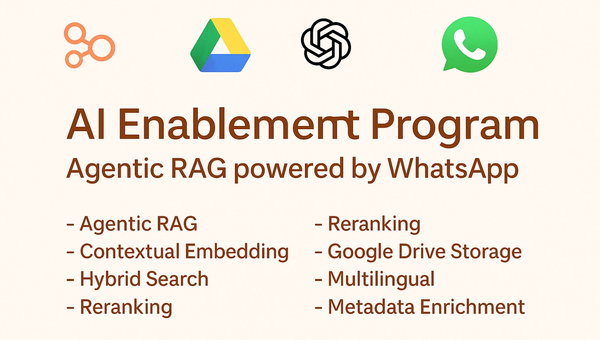
Agentic WhatsApp RAG for KSA — Accurate, Secure, Multilingual
WhatsApp-native Agentic RAG for KSA: auto-ingest from Google Drive, contextual embeddings with metadata enrichment, hybrid search with Cohere reranking, secure file links, and full Arabic/English support
View case study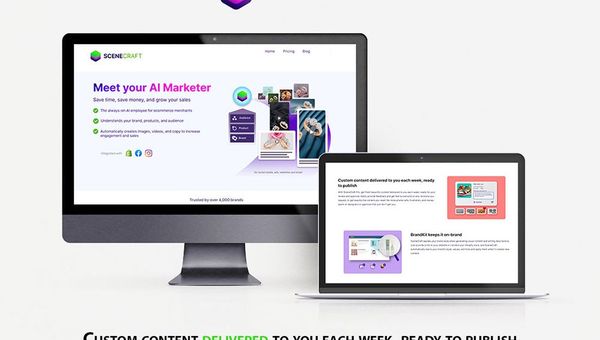
SceneCraft AI — Generate, Refine, and Publish Social Posts at Scale
Create on-brand posts in minutes: generate with custom models, refine with an AI-guided studio, add OpenAI copy, and publish to Instagram—optionally pulling products straight from Shopify.
View case studyCommon business problems AI consulting helps resolve
Many teams do not struggle with interest in AI. They struggle with decision quality, sequencing, and implementation realism.
The most common pre-consulting friction points:
Too many AI ideas and no prioritization framework
Internal teams often have a long list of possible AI initiatives but no clear way to rank them. That leads to stalled decisions, scattered experimentation, or spending on low-impact ideas.
Unclear business case and weak decision confidence
Some initiatives sound promising but lack a clear link to workflow improvement, product value, cost reduction, speed, or operational leverage. Without that link, it becomes hard to justify next steps.
Fragmented knowledge and weak data readiness
AI systems are only as useful as the inputs, sources, and workflows they depend on. Disconnected documents, inconsistent data, and unclear source ownership can undermine good ideas early.
Uncertainty around the right implementation path
Teams often are not sure whether they need a chatbot, a retrieval-backed assistant, an AI agent, a workflow automation layer, or a narrower proof of concept. AI consulting helps create that distinction.
Pilot risk without a production path
Some businesses can get an early demo running but still lack a credible plan for rollout, integrations, governance, evaluation, or long-term maintainability.
Integration, governance, and ownership gaps
Even strong ideas can stall when no one has mapped the system dependencies, approval boundaries, or shared ownership between product, engineering, operations, and leadership.
These are the kinds of problems that make AI initiatives harder to start well without structured consulting support.
Why businesses invest in AI consulting now
Teams usually buy this service when the cost of waiting starts to look less useful than the cost of making clearer decisions.
They need to move from experimentation to an actual plan
Internal AI exploration can only go so far without a structured view of use cases, risks, dependencies, and implementation direction. Consulting helps turn interest into a usable plan.
They want to avoid wasting budget on the wrong first build
Businesses often buy this now when they want clearer prioritization before committing engineering time, vendor spend, or internal change effort.
They need more confidence around architecture and rollout choices
As AI initiatives touch data, workflows, internal systems, and customer-facing experiences, the need for feasibility and governance clarity becomes more immediate.
They want business value, not another vague AI exploration cycle
This is often the point where leadership wants a clearer answer to what should be built, what should wait, and what the next concrete milestone should be.
What BitBytes AI consulting services actually cover
This service helps businesses reduce ambiguity at the point where strategy, feasibility, and delivery choices start to matter.
Use case discovery and prioritization
We help identify where AI fits across products, workflows, support functions, knowledge systems, and internal operations. The goal is to separate interesting ideas from the opportunities that deserve action first.
Feasibility and architecture planning
This includes evaluating which pattern is the best fit, such as generative AI, RAG, AI agents, workflow automation, chatbot experiences, or a narrower MVP path. The purpose is to align business goals with realistic system design choices.
Data, workflow, and integration assessment
This helps clarify what existing systems, documents, APIs, workflows, and operational dependencies shape the solution. It reduces the chance of a promising AI concept failing because the surrounding environment was not considered early enough.
Roadmap, pilot, and implementation planning
The output is not just advice. It is a more grounded path forward that can include a pilot definition, MVP scope, implementation roadmap, delivery sequencing, and transition into build when the initiative is ready.
How AI consulting at BitBytes moves from problem framing to next-step clarity
The process is designed to be practical, decision-oriented, and useful to both business and technical stakeholders.
Align on business goals, constraints, and decision context
The first step is understanding what the business is trying to improve, what is already being considered, what constraints matter, and what outcome the engagement needs to clarify.
Review workflows, systems, knowledge sources, and current friction
This helps surface where the real bottlenecks live, which systems matter, where information breaks down, and what operational realities shape the solution.
Identify and rank the strongest AI use cases
We help compare use cases based on value, feasibility, complexity, data readiness, and implementation risk so the next move is not driven by novelty alone.
Define the right technical direction
This is where the service helps distinguish between patterns such as RAG, agents, workflow automation, AI chatbots, generative AI features, or a scoped PoC or MVP.
Shape the roadmap, pilot, or MVP scope
Once the direction is clearer, the next step is turning that into a credible delivery path with scope boundaries, sequencing, and practical milestones.
Prepare for implementation and iteration
If the initiative moves forward, the engagement supports a cleaner handoff into build, rollout planning, testing, and future improvement.
Consulting Outcomes
What you get from this consulting process
Where AI consulting leads next
AI consulting often acts as the entry point. Once the right use case and delivery path are clear, the next step usually maps to one of these related services.
Generative AI Development Services
This is the right next move when the consulting engagement identifies a need for generative AI features, content workflows, AI-native product capabilities, or model-driven user experiences.
Explore this serviceAI Agent Development Services
This is best suited for cases where the recommendation moves beyond assistance into action-taking systems that can reason across tools, trigger workflows, or coordinate multi-step tasks.
Explore this serviceAI Workflow Automation Services
This is relevant when the strongest value lies in reducing repetitive work, orchestrating tasks across systems, or streamlining internal operations with AI-supported automation.
Explore this serviceRAG Development Services
This is often the next step when the initiative depends on accurate retrieval from internal knowledge, documents, or structured and unstructured content sources.
Explore this serviceAI Chatbot Development Services
This is a strong follow-on service when the consulting work points toward support assistants, internal copilots, knowledge-backed conversational interfaces, or channel-based experiences.
Explore this serviceAI PoC & MVP Development
This is the most natural next step when the consulting outcome is a defined pilot, a testable business case, or a first release that needs to validate the concept in a real environment.
Explore this serviceOperating environments where AI consulting is especially useful
AI consulting matters most where the business problem is clear enough to matter but the path to implementation is not yet obvious.
SaaS and software product teams
These teams often need to evaluate AI-enabled product features, assistant experiences, workflow improvements, and system-level feasibility before changing the roadmap.
Operations-heavy organizations
Businesses with manual coordination, internal service processes, support workloads, or repetitive handoffs often need help identifying where automation or AI assistance will actually improve throughput.
Knowledge-dense businesses
Teams working with large document sets, internal guidance, fragmented information, or domain-heavy decision support often benefit from consulting before building RAG or assistant systems.
Customer support and enablement environments
This is a strong fit for businesses exploring conversational support, internal enablement assistants, multilingual help flows, or AI-supported response quality.
Companies exploring AI-enabled experiences
When a business wants to add AI to a customer-facing product, internal tool, or digital workflow, consulting helps prevent weak scope decisions and overbuilt first versions.
Practical outcomes a strong AI consulting engagement should create
The goal is not abstract strategy. It is clearer decisions and a better path to execution.
Consulting Quality
After engagementWhat improves with structured AI consulting
Sharper use case prioritization
Teams leave with a more defensible view of which AI opportunities deserve immediate attention and which ones should wait.
Better implementation readiness
The engagement helps surface blockers early, including data quality issues, missing system dependencies, workflow gaps, and rollout constraints.
A clearer AI roadmap
Buyers gain a more useful sequence for what to assess, prototype, build, and launch rather than treating every idea as equally urgent.
Lower delivery risk
A stronger upfront view of architecture, integrations, ownership, and scope reduces the chance of weak pilots or avoidable rework later.
Stronger alignment across teams
Consulting helps product, engineering, operations, and leadership work from the same understanding of what the initiative is trying to achieve.
Better fit between business goals and technical approach
The result is a more grounded decision about whether the business needs RAG, agents, automation, chatbots, generative features, or a narrower pilot.
When AI consulting is the right starting point
Best fit
Not the right fit
You have multiple AI ideas and need a clear prioritization framework
You already have a fully defined scope and only need execution capacity
You need help choosing between RAG, agents, automation, chatbots, or an MVP path
You want vague AI brainstorming with no business decision attached
Your initiative depends on data, workflows, or system integrations that need early assessment
You expect guaranteed outcomes without internal collaboration or decision-making
You want a roadmap that can realistically move into delivery
You are looking for a low-effort trend exercise rather than a practical implementation path
Technical stack areas AI consulting often helps define
The purpose of this section is to show how consulting decisions connect to architecture choices without turning the page into a vendor list.
Application layer
Internal dashboards, assistant interfaces, workflow surfaces, embedded product experiences, and web applications that make the AI system usable in context. Common examples include React, Next.js, and TypeScript.
Retrieval and knowledge layer
Knowledge pipelines, document ingestion, chunking strategy, metadata enrichment, retrieval logic, and search quality design for systems that depend on accurate context.
Data and vector layer
Structured and unstructured data storage, indexing choices, and vector infrastructure that support retrieval quality and scalable information access. Common patterns may include PostgreSQL, Supabase, Pinecone, or similar platforms.
Model and orchestration layer
Model selection, prompt design, orchestration flows, agent logic, evaluation pathways, and tool-calling patterns that support the system behavior the business actually needs.
Integration and workflow layer
Connections to APIs, internal tools, CRMs, support platforms, document stores, messaging channels, and workflow systems so the solution can operate inside real business processes.
Observability and governance layer
Monitoring, logging, evaluation, access control, source freshness, approval boundaries, and operational guardrails that help AI systems stay useful and manageable over time.
Recommended delivery base
A practical delivery base usually favors maintainable application architecture, modular orchestration, reliable data flows, and observability from the start rather than a fragile demo stack.
Frequently Asked Questions
Common questions about AI consulting services, what they include, and how to get started.
Get clear on what your AI initiative should do next
A discovery call is the best next step if the business has a real AI opportunity but needs sharper prioritization, clearer technical direction, or a more credible path to implementation.
Book a Discovery Call
with an AI Consulting Expert