AI product development services for teams turning AI ideas into usable, production-ready products
BitBytes helps companies design, build, integrate, and launch AI-enabled products that solve real workflow problems. This service is built for teams creating new AI products or adding AI features into existing software, with support across product thinking, UX, engineering, integrations, release readiness, and iteration.




What AI product development services help you move forward with
Turn an AI idea, product requirement, or internal workflow opportunity into a defined product scope.
Move from prototype or concept into a production-ready experience with better technical and product alignment.
Connect AI capabilities to real systems, data sources, workflows, and user needs.
Build customer-facing features, internal copilots, workflow tools, or AI-enabled SaaS functionality with a clearer delivery path.
Reduce risk by treating AI like a product and engineering problem, not just a model selection task.
Who AI product development services are designed for
This service is best for buyers who already see a credible AI opportunity and need help shaping, building, and shipping it with real product and engineering discipline.
Founders building a new AI-enabled product
This is a strong fit when a founder has a clear problem to solve but needs help turning that into a usable product, MVP, or early production release.
CTOs expanding an existing product with AI
This works well for technical leaders who need to add AI features into a live platform without creating poor UX, fragile integrations, or unreliable behavior.
Heads of Product defining an AI roadmap
This is useful when a product team needs help prioritizing use cases, shaping the experience, and moving from idea to an executable delivery plan.
Innovation teams validating what is worth building
This fits teams exploring multiple AI directions and needing a partner that can help narrow the opportunity, prototype the right path, and carry it into delivery.
Operations leaders improving internal workflows
This is relevant when the goal is to reduce manual work, improve access to internal knowledge, or support complex decisions inside existing systems.
Software teams that need broader delivery support
This is often the right route when the need is bigger than AI consulting or a narrow PoC, and the team wants product, design, engineering, and rollout support together.
Why businesses choose this service now
Teams usually buy AI product development services when AI becomes a practical product or workflow decision, not just an interesting idea. The timing is often driven by delivery pressure, internal bandwidth gaps, or the need to turn an early concept into something usable.
There is pressure to ship AI features credibly
Buyers often need to respond to product expectations without releasing something shallow, unreliable, or disconnected from real user needs.
Internal teams do not have full delivery coverage
A company may have engineering strength but limited AI product strategy, AI UX, evaluation, or integration capacity across the full build.
Prototype-to-production risk is becoming visible
Many teams can test a model quickly, but moving into release-ready behavior, product flow, and system integration is a different challenge.
Valuable workflow opportunities are sitting inside existing products
Businesses often see clear opportunities to improve support, operations, knowledge access, or decision-heavy workflows with AI, but need help structuring the delivery path.
AI capabilities need to create product value, not just novelty
The business case becomes stronger when AI can improve usability, reduce friction, support differentiation, or make the product more useful in daily work.
Decision-makers want validation before a bigger long-term build
A focused product engagement can help the business test the right use case, define a realistic architecture, and build with more confidence.
Examples of how this work shows up in real product contexts
These proof stories show how product thinking, engineering execution, and workflow fit come together in different kinds of builds.
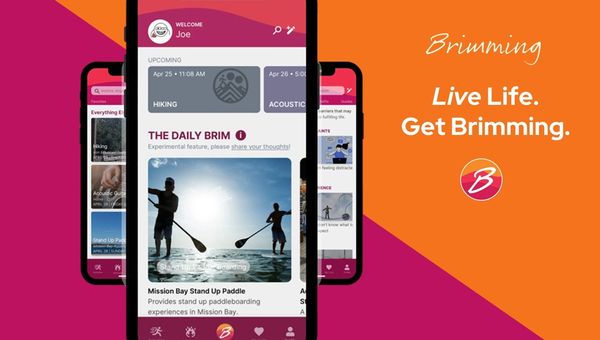
Brim Living (Brimming): Agentic AI for Real-World Growth
Brim Living’s Brimming app blends agentic AI and human expertise to help people build habits, stay motivated, and act on personalized recommendations—turning intention into lasting behavior change.
View case study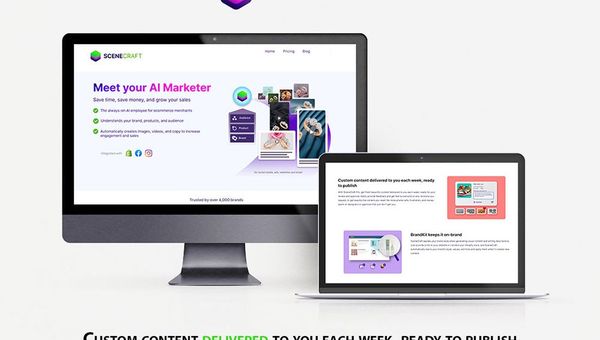
SceneCraft AI — Generate, Refine, and Publish Social Posts at Scale
Create on-brand posts in minutes: generate with custom models, refine with an AI-guided studio, add OpenAI copy, and publish to Instagram—optionally pulling products straight from Shopify.
View case study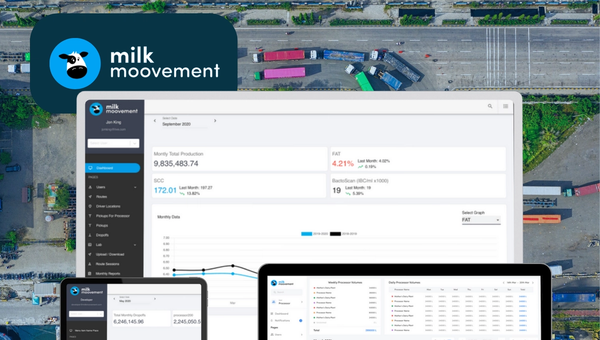
Milk Moovement: The Operating System for Modern Dairy Co-ops
Milk Moovement is a cloud platform that gives dairy co-ops a real-time command center—from farm pickup to plant intake. It streamlines routing and scheduling, unifies quality and volume data, and automates complex payments, replacing spreadsheets with a single source of truth. The result: fewer miles, faster payouts, and smarter decisions across the dairy supply chain.
View case studyThe delivery problems this service is built to solve
AI product development usually becomes necessary when a team can see the opportunity, but the path from idea to usable software is still unclear. These are some of the most common problems that create that gap.
The most common delivery gaps we see:
The use case sounds promising, but the product scope is still fuzzy
Teams often know they want to use AI, but have not yet translated that into a clear feature set, workflow, or product boundary.
Early prototypes do not survive contact with real product requirements
A quick test may show technical promise, but it often breaks down when real users, workflows, permissions, edge cases, and release standards enter the picture.
AI is not well connected to the systems that actually matter
Without the right integrations, data access, or workflow hooks, AI features struggle to become useful inside live products or internal tools.
Output quality is hard to trust at production level
Teams often need a better way to handle answer quality, response behavior, human review, fallback logic, and evaluation before going live.
Internal bandwidth is spread too thin across the build
AI product work usually needs product strategy, UX, engineering, integration thinking, and iteration planning at the same time, which many teams cannot cover alone.
There is no clear post-launch operating model
Even when a feature can be launched, many teams still need a plan for monitoring, improvement, workflow adjustment, and product evolution after release.
These are some of the most common problems that create the gap between seeing an AI opportunity and shipping usable software.
What BitBytes helps you build and deliver
AI product development services at BitBytes are designed to turn a valid opportunity into a usable software experience with the right product structure, technical foundation, and release path.
Product definition that connects AI to a real use case
The first goal is to define what the product or feature should actually do, who it serves, where it fits in the workflow, and what success should look like.
Prototyping that tests the experience, not just the model
The work can include early validation of flows, AI behavior, UX patterns, and feasibility so the team can learn before committing to a wider build.
Engineering that connects intelligence to the real system
This can include application development, model integration, retrieval-backed experiences, workflow logic, API connections, and supporting product architecture.
Release preparation with room for iteration after launch
The service is built to support launch readiness, evaluation, monitoring, and the next set of product decisions once real usage begins.
How AI product development typically moves from idea to rollout
The delivery path should feel like a real product process, not a vague AI engagement. Each step exists to reduce risk, improve fit, and move the team closer to a release that works in practice.
Define the use case and success criteria
Clarify the user problem, the product opportunity, the workflow context, and what a useful first release should achieve.
Audit systems, data, and delivery constraints
Review the systems, data sources, knowledge inputs, interfaces, team constraints, and technical limitations that shape the build.
Shape the product experience and AI behavior
Design the feature flow, assistant interaction, automation logic, or decision-support experience so it fits how people will actually use it.
Build the product, integrations, and supporting logic
Develop the application layer, AI behavior, retrieval or automation components, integrations, and the supporting architecture needed for real usage.
Evaluate, harden, and prepare for release
Test behavior, review edge cases, improve reliability, and prepare the feature or product for controlled rollout.
Launch, learn, and improve after release
Use product feedback, usage patterns, and operational observations to refine quality, workflow fit, and the next stage of the roadmap.
Delivery Outcomes
What you get from our AI product development process
Where this service tends to be most relevant
AI product development is especially useful in environments where software already carries real operational weight and AI needs to improve how people work, decide, or interact with the product.
B2B SaaS platforms
A strong fit when AI needs to improve product utility, support user workflows, or create differentiated features inside an existing software platform.
Workflow-heavy internal systems
Useful when internal teams rely on software to move work forward and AI can reduce friction, surface answers faster, or support repetitive decisions.
Knowledge-intensive support environments
Relevant when people need faster access to internal knowledge, contextual answers, or guided actions across multiple systems and sources.
Content and commerce workflows
A good fit when teams want AI to support content generation, product operations, classification, search, or user-facing assistance inside a digital experience.
Regulated or high-review product contexts
Important when AI needs tighter control, clearer workflow boundaries, or stronger human review before becoming part of an operational process.
What this work is designed to improve
The outcomes of a good AI product development engagement should be practical, product-relevant, and visible in how the software works after release.
AI Product Quality
After deliveryWhat improves when AI is built into the product properly
Clearer product scope for the right AI opportunity
The team gets a better definition of what to build, why it matters, and how it fits the product roadmap.
Faster movement from concept to release-ready product
The build path becomes more structured, which reduces wasted effort between idea, prototype, and production delivery.
Better workflow fit inside the actual product
AI becomes more useful because it is connected to real user flows, product logic, and system context.
Stronger usability around AI-enabled interactions
The product experience improves because AI behavior is shaped through product design, not dropped into the interface as an isolated feature.
More confidence in quality and rollout decisions
The team has a better basis for evaluating readiness, reliability, fallback handling, and what should happen after launch.
A clearer iteration path after the first release
The product is easier to improve because the initial build includes a stronger operating model for learning, refinement, and expansion.
When this is the right engagement and when it is not
Best fit
Not the right fit
You need help shaping and building an AI-enabled product or feature from concept through delivery.
You only want a lightweight strategy conversation with no expectation of build support.
You are adding AI into an existing software product and need product, UX, engineering, and integration thinking together.
You only need a simple standalone chatbot with limited workflow depth.
You want a partner that can work through prototype, product design, engineering, and rollout readiness.
You are looking for a generic AI demo rather than a product tied to a real workflow or user need.
You need a broader product engineering engagement that may include RAG, agents, automation, or embedded AI features.
You already have the full product and engineering path locked and only need a narrow specialist task.
What the delivery stack can look like in practice
The stack should be shaped around the product, not forced into a fixed template. The goal is to make it clear how the experience layer, AI layer, systems layer, and monitoring layer connect inside a real build.
Application layer
User-facing products, embedded AI features, internal copilots, admin workflows, or operational interfaces built around real usage patterns. Common examples may include React, Next.js, TypeScript, and supporting application frameworks.
Retrieval layer
A retrieval or context layer used when the product needs grounded answers, document access, knowledge recall, or system-aware response generation rather than isolated model output.
Data / vector layer
Structured data sources, content stores, and vector-backed indexing where semantic retrieval or knowledge-backed product behavior is needed.
Model and tool layer
LLM APIs, orchestration logic, tool use, prompt workflows, or task-specific model handling shaped around the product requirement rather than a one-size-fits-all stack.
Integration layer
Connections to APIs, CRMs, internal tools, product systems, databases, and workflow triggers so the AI capability can act inside real software conditions.
Evaluation and observability layer
Monitoring, quality review, usage analysis, iteration loops, and other mechanisms that help the team assess behavior after launch and improve over time.
Recommended delivery base
A practical engineering base that may include Python, Node.js, cloud deployment, modern frontend architecture, and the surrounding infrastructure needed to support a maintainable product release.
Related BitBytes AI services and when they are the better fit
This page covers the broader product engineering engagement for teams building a real AI-enabled product. In some cases, a narrower BitBytes service page is the better match for the buyer's immediate need.
Generative AI Development Services
Best when the focus is specifically on building features powered by generative models, such as content generation, summarization, transformation, or generation-heavy workflows.
Explore Generative AI DevelopmentAI Agent Development Services
A better fit when the goal is to build agent-style systems that can reason through tasks, use tools, and complete multi-step actions.
Explore AI Agent DevelopmentAI Workflow Automation Services
Best when the main priority is automating business processes, reducing manual operational effort, and connecting AI into repeatable workflow execution.
Explore AI Workflow AutomationRAG Development Services
A stronger route when the core need is retrieval-backed answers, grounded knowledge access, and better response quality tied to internal or external data sources.
Explore RAG DevelopmentAI Chatbot Development Services
Best for teams that primarily need conversational interfaces for support, internal assistance, lead qualification, or guided interactions rather than a broader product build.
Explore AI Chatbot DevelopmentAI PoC & MVP Development
A better fit when the immediate goal is to validate feasibility, test a narrow use case, or ship an early version before committing to a wider product engagement.
Explore AI PoC & MVP DevelopmentAI Consulting Services
Best when the buyer needs strategy, prioritization, assessment, or roadmap clarity first and is not yet ready to enter a build-focused engagement.
Explore AI ConsultingWhat Our Clients Say
"BitBytes delivered well-performing solutions that met our quality standards and requirements. They were accommodating of changes in the scope and went the extra mile to deliver top-notch work on time. They were detail oriented and outstanding in their project management and communication."

"BitBytes' work has contributed to more free time for the client to focus on other business matters. The team will go to any extent to provide the best quality. Keeping in touch on a regular basis, they have good communication skills and give feedback to help the client improve."

"BitBytes has delivered the project on time. They have communicated clearly and frequently, ensuring an effective workflow. They have been knowledgeable, technical, and experienced. Their high-quality work and timely delivery have been hallmarks of their work."

Frequently Asked Questions
Common questions about AI product development services, what they include, and how to get started.
Start with a technical conversation focused on product fit
The first step should help clarify whether this is the right service, what kind of AI-enabled product or feature makes sense, and what the most practical delivery path looks like from here.
Book a Technical Discovery Call
with an AI Product Development Expert